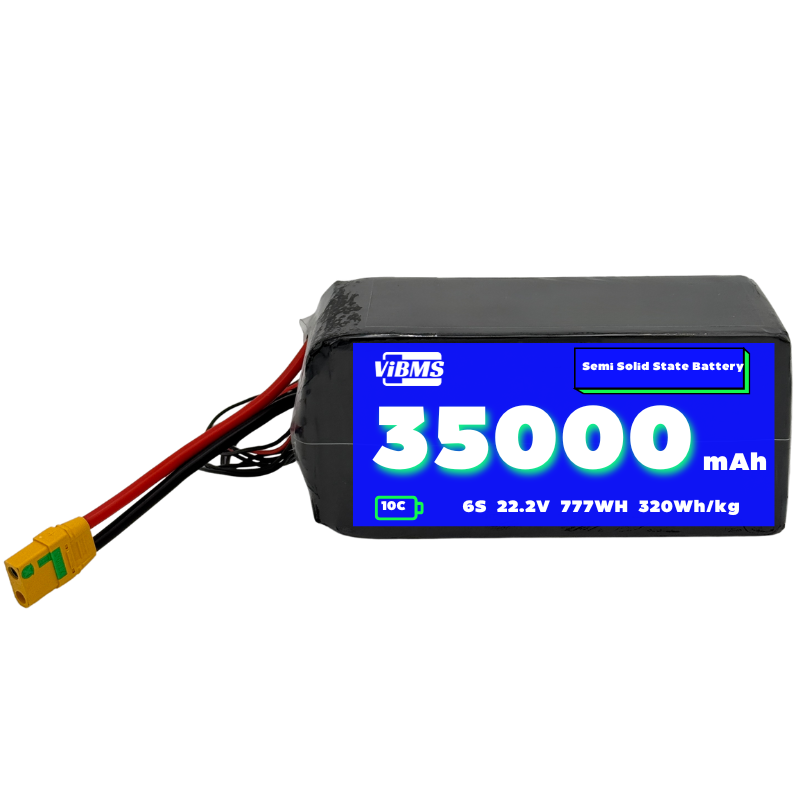
Drone users often face uncertainty about how long their drone will stay airborne. Misjudging battery life mid-flight can lead to crashes, lost gear, or ruined missions. Understanding real-world drone battery durations helps in better planning and safer operation.
Drone battery life varies by type and use case. Most consumer drones last 20–40 minutes on a single charge. Industrial and enterprise models can operate for 1–2 hours. Experimental drones with hybrid or solar tech may fly for several hours. Usage, payload1, and battery type all impact duration.
I work with drone batteries every day, so I see how small choices make big differences in flight time. I will break down the key factors in a simple way and use real numbers, so the logic stays clear for both hobby pilots and professional users.
What factors affect drone battery life2?
Many assume battery life depends solely on battery size. Ignoring critical variables like payload, wind resistance, or motor efficiency3 can drastically shorten flight time. Knowing all influencing factors helps optimize flight time and avoid costly failures.
Drone battery life depends on drone weight4, payload, motor type, flight speed5, battery chemistry6, and environmental factors7 like temperature and wind. Larger payloads and high-speed flights consume more energy. Efficient motors and advanced battery management systems8 can extend usable battery duration significantly.
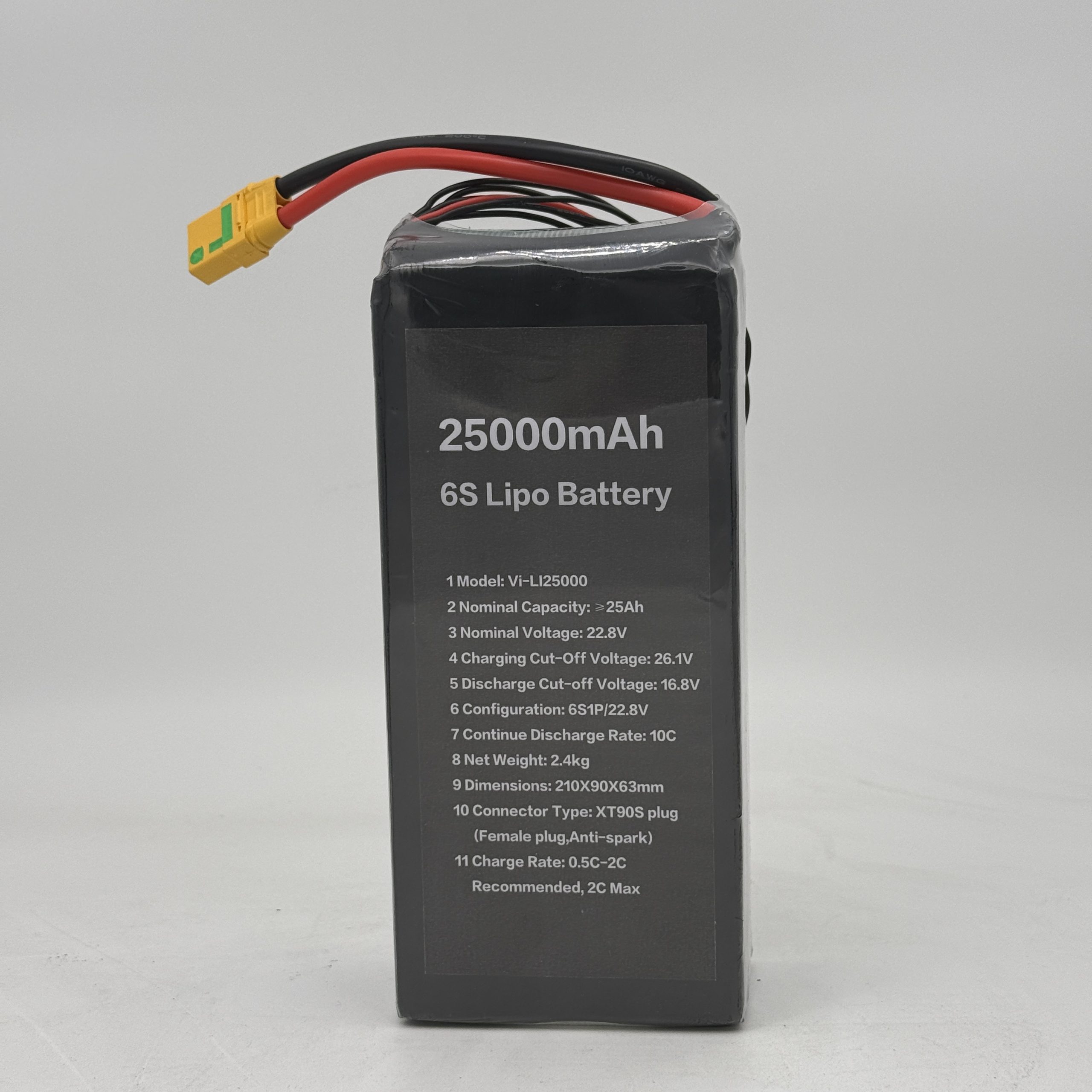
I want to go deeper now. I will walk through each factor step by step, use simple math, and show how small changes in setup or behavior change both flight time and long-term battery health9.
Main technical factors that control flight time
When I plan a drone power system, I always start with some core parameters.
1. Battery capacity and usable energy
Battery capacity tells me how much charge the pack can store.
- Capacity unit: milliamp-hour (mAh) or amp-hour (Ah)
- 1 Ah = 1000 mAh
To use capacity in formulas, I convert mAh to Ah.
Example:
- A battery has 5000 mAh capacity
- In Ah, this is 5000 ÷ 1000 = 5 Ah
I never use 100% of capacity in real flying. To protect LiPo or Li-ion cells, I normally use only about 80% of rated capacity.
So I define:
- Usable capacity (Ah) = Rated capacity (Ah) × 0.8
Example 1: usable capacity
- Battery: 4S 5000 mAh (5 Ah)
- Usable capacity = 5 Ah × 0.8 = 4 Ah
If the average current draw10 of the drone is 20 A, then basic flight time estimate is:
- Flight time (hours) = Usable capacity (Ah) ÷ Average current (A)
- Flight time (hours) = 4 ÷ 20 = 0.2 hours
- Flight time (minutes) = 0.2 × 60 = 12 minutes
So this setup gives about 12 minutes in ideal conditions.
I use this formula a lot because it is simple and accurate enough for planning.
2. Cell count and voltage11 (S rating)
LiPo and Li-ion drone batteries use “S” to show cell count in series.
- 1S = 1 cell
- 4S = 4 cells
- 6S = 6 cells
A typical LiPo cell:
- Fully charged: 4.2 V
- Storage: about 3.8 V
- Safe minimum under load: about 3.5 V per cell
Nominal voltage is usually 3.7 V per cell. So a 4S pack has:
- Nominal voltage ≈ 4 × 3.7 = 14.8 V
Higher voltage (more cells in series) does not add energy by itself if capacity stays the same, but higher voltage lets the system draw less current for the same power. Lower current can reduce losses in wires and ESC, so real flight time can improve.
Power relation:
- Power (W) = Voltage (V) × Current (A)
If the drone needs 300 W to hover:
- On 4S (14.8 V): Current ≈ 300 ÷ 14.8 ≈ 20.3 A
- On 6S (22.2 V): Current ≈ 300 ÷ 22.2 ≈ 13.5 A
Lower current gives less heat and less voltage sag, so I can use capacity more efficiently.
3. Weight of battery and total drone weight
Every gram matters. A larger battery gives more capacity, but also adds weight. More weight means more thrust needed to hover, so motors draw more current.
I always look at the whole system:
- Drone frame
- Motors
- ESC
- Flight controller
- Battery
- Camera, gimbal, payload
If I increase battery weight by 100 g, the drone may need 10–20% more current to hover. This can erase some or all of the extra capacity.
Example 2: weight trade-off
Case A:
- Battery: 4S 3000 mAh (3 Ah)
- Battery weight: 250 g
- Average current draw: 15 A
Usable capacity: 3 × 0.8 = 2.4 Ah
Flight time:
- Hours: 2.4 ÷ 15 = 0.16 h
- Minutes: 0.16 × 60 ≈ 9.6 min
Case B:
- Battery: 4S 5000 mAh (5 Ah)
- Battery weight: 400 g (150 g heavier)
- Due to extra weight, average current draw increases to 21 A
Usable capacity: 5 × 0.8 = 4 Ah
Flight time:
- Hours: 4 ÷ 21 ≈ 0.19 h
- Minutes: 0.19 × 60 ≈ 11.4 min
So I gain less than 2 minutes, but I carry a much heavier pack. For some missions this is fine, but for agile flying or racing it is a bad trade.
4. C rating12 and current delivery
C rating tells me how much current the battery can safely provide. It is a multiplier on capacity.
Formula:
- Max continuous current (A) = Capacity (Ah) × C rating
Example:
- Battery: 4S 1500 mAh (1.5 Ah), 75C
- Max current = 1.5 × 75 = 112.5 A
I rarely push to the printed C limit. True safe current is often lower. I prefer to design for 50–70% of printed maximum current for long life.
If the drone often draws close to or above safe C, the pack heats up, sags in voltage, and ages fast. Flight time then shrinks after only a few cycles.
5. Motor, propeller, and efficiency
The power system has big influence on battery life:
- Motor kV: High kV uses more current at the same voltage.
- Prop size and pitch: Larger or higher pitch props pull more current.
- Motor quality: Good motors run smoother and waste less power as heat.
I match motors, props, and battery voltage so that hover current stays low and peak current stays well under the continuous C rating.
I look at motor test data from the manufacturer. I check current draw at different throttle levels and prop sizes. This helps me choose a combo that gives enough thrust without pulling crazy amps.
Table: Key factors that affect drone battery life
| Factor | What it is | How it affects flight time |
|---|---|---|
| Capacity (mAh / Ah) | Total stored charge | Higher capacity can increase flight time |
| Voltage / Cell count (S) | Pack voltage level | Higher voltage can improve efficiency |
| Total weight | Drone + battery + payload | Higher weight increases current draw |
| C rating | Max safe discharge rate | Too low C causes sag, heat, and damage |
| Motor + prop efficiency | How well power turns into thrust | Better efficiency gives longer flight time |
| Flying style | Smooth vs aggressive | Hard acro uses much more current |
| Weather | Wind, temperature, air density | Cold or windy weather reduces performance |
| Battery age and health | Cycle count, storage history | Old or abused packs have less usable capacity |
Human factors: flying style13 and habits
I see a huge difference between two pilots using the same drone and battery.
- A calm pilot flies smooth lines, keeps throttle low, and avoids full throttle punches.
- A freestyle pilot does constant flips, rolls, and full throttle climbs.
The second pilot can cut flight time in half compared to the first. The battery does not change. Only behavior changes.
I also see habits like:
- Taking off with a partly charged battery.
- Ignoring low voltage warnings.
- Landing with cells at 3.2 V or less.
These habits shorten cycle life. After some weeks, the same pack holds less energy, so flight time falls even more.
Environment and conditions
Three main environmental factors matter for battery life.
1. Temperature
LiPo and Li-ion cells do not like cold weather. At low temperature, internal resistance increases. This causes:
- More voltage sag under load
- Lower usable capacity
If I fly in winter, a pack that gives 15 minutes in summer may only give 10–12 minutes. I keep packs warm before flight, for example in an inside pocket or insulated bag.
Very high temperature is also bad. It speeds up chemical aging. I never let packs sit in a hot car or under direct sun for long.
2. Wind
Strong wind forces the drone to work harder to hold position. The motors must spin faster and adjust constantly. Current draw rises, so flight time decreases.
If my mission is critical, I always plan for shorter flight time when wind is strong.
3. Altitude and air density
At high altitude, air is thinner. Props must spin faster to produce the same thrust. That means more current and less flight time.
This is more important for heavy camera drones than for tiny whoops, but I still consider it for mountain work.
Battery health and cycle life
Drone battery “life” has two meanings:
- Flight time per charge
- Number of cycles before the pack becomes unusable
The same factors that reduce flight time per charge also reduce cycle life.
Bad habits include:
- Over-discharge (flying until cells drop below about 3.3–3.4 V under load)
- Over-charge (charging above 4.2 V per cell for normal LiPo)
- High storage state (keeping packs full for many days)
- High temperature during use or storage
To keep good flight time over many cycles, I try to:
- Charge to 4.2 V per cell for normal LiPo.
- Land when resting voltage is around 3.6–3.7 V per cell.
- Store packs near 3.8 V per cell.
- Avoid leaving packs in hot places.
These simple rules keep capacity loss slow, so my flight time stays stable for many months.
I will compare two common setups for a 5-inch FPV drone.
Setup A: Light pack, high-C
- Battery: 6S 1100 mAh (1.1 Ah), 120C
- Weight: 180 g
- Average current draw: 25 A (freestyle)
Usable capacity: 1.1 × 0.8 = 0.88 Ah
Flight time:
- Hours: 0.88 ÷ 25 = 0.0352 h
- Minutes: 0.0352 × 60 ≈ 2.1 min
This is very aggressive flying, so flight time is short.
Setup B: Larger pack, moderate current
- Battery: 6S 1500 mAh (1.5 Ah), 100C
- Weight: 230 g
- Average current draw: 22 A (smoother style, a bit more weight)
Usable capacity: 1.5 × 0.8 = 1.2 Ah
Flight time:
- Hours: 1.2 ÷ 22 ≈ 0.0545 h
- Minutes: 0.0545 × 60 ≈ 3.3 min
I gain more than one extra minute, which is a 50% increase. For freestyle, this is a big change. But the drone feels heavier and less agile. I must choose based on my flying goal.
When I plan a new drone or try to improve an existing one, I follow this simple process:
- I list my mission: racing, freestyle, cinematic, mapping, inspection.
- I estimate target flight time.
- I choose motor and prop combo that gives enough thrust with good efficiency.
- I choose a battery voltage (S) that keeps current reasonable.
- I test with one battery capacity14, measure average current, and calculate flight time.
- I try a slightly heavier pack and check if the extra time is worth the extra weight.
- I adjust my flying style and payload to hit the target.
When I see drone battery life in this full picture, I stop blaming only the pack. I treat the battery, drone, and pilot as one system, and this is how I get stable and predictable flight time.
How long does a drone battery last on average?
New drone users often overestimate battery capacity. This can result in missions cut short, damaged equipment, or incomplete data collection. A clear average gives realistic expectations and improves flight planning.
On average, most consumer drones offer 20–30 minutes of flight time per full charge. Advanced models like the DJI Mavic series can reach up to 40 minutes. Industrial drones with larger batteries typically last 60–120 minutes, depending on the model and conditions.
I will now explain these ranges in a clear and structured way. I will break down drone types15, give real examples, and show how I estimate average flight time with simple math that any pilot can use.
Average flight time by drone category
I work with many different drone users, from FPV racers to industrial mapping teams. I see big differences in flight time even when packs have similar capacity on the label. So I first group drones into broad use cases.
I use these categories:
- Toy and beginner camera drones
- Micro FPV and whoops
- 5-inch FPV freestyle and racing drones
- Long-range FPV drones (often with Li-ion)
- Consumer camera drones (e.g. photography and 4K video)
- Professional mapping and inspection drones
I will give typical ranges that I see in real work and that match community data.
Table: Typical average flight time by drone type
| Drone type | Typical battery type | Typical capacity (per pack) | Average flight time per pack* |
|---|---|---|---|
| Toy / beginner camera drones | 2S–3S small LiPo | 500–1500 mAh | 5–12 minutes |
| Tiny whoops / micro FPV (1S–3S) | 1S–3S LiPo or LiHV | 260–850 mAh | 3–6 minutes |
| 5″ FPV freestyle / racing | 4S or 6S LiPo | 1000–1500 mAh | 3–7 minutes |
| Long-range FPV (sub-250g / 4–7″) | 4S–6S Li-ion or high-cap LiPo | 3000–4000 mAh (Li-ion) | 15–30+ minutes |
| Consumer camera drones | Smart LiPo packs (3S–4S, HV in some) | 2500–5000+ mAh | 20–40+ minutes |
| Professional mapping / inspection | High-voltage multi-pack LiPo/Li-ion | 5000–10000+ mAh | 25–45+ minutes |
These values assume normal flying, no extreme wind, and batteries in good health. Community tests and long-range builds often report around 30 minutes with well-tuned Li-ion setups on sub-250g or light long-range quads. Typical 5-inch 4S/6S 1500 mAh freestyle quads see around 3–4 minutes of hard flying with 20–30% capacity left in the pack.
I like to treat these numbers as starting points. After I test a specific build, I update the real “average” flight time for that drone and log it.
How I turn capacity and current into average flight time
I use one simple formula in almost every project:
Flight time (minutes) ≈ (Capacity (Ah) × 0.8 ÷ Average current (A)) × 60
Steps:
- I convert mAh16h](https://www.rapidtables.com/convert/charge/mah-to-ah.html)[^17] to Ah:
- Ah = mAh ÷ 1000
- I multiply by 0.8 to use only 80% of capacity, to protect the battery.
- I divide by average current draw in amps.
- I multiply by 60 to get minutes.
This formula does not care about drone type. It only cares about how many amp-hours I can really use and how many amps the drone normally consumes.
I take a typical 5-inch 6S setup:
- Battery: 6S 1100 mAh LiPo17
- Capacity in Ah: 1100 ÷ 1000 = 1.1 Ah
- Usable capacity: 1.1 × 0.8 = 0.88 Ah
For aggressive freestyle, I often see average current around 25–30 A. Many community tests report that a 1500 mAh Ah pack gives about 3–4 minutes, which matches this current range. I will use 25 A here.
Now I calculate:
- Flight time (hours) = 0.88 ÷ 25 = 0.0352 hours
- Flight time (minutes) = 0.0352 × 60 ≈ 2.11 minutes
If the pilot flies a little smoother and keeps current closer to 18–20 A, then:
- 0.88 ÷ 20 = 0.044 hours
- 0.044 × 60 = 2.64 minutes
And with even more relaxed flying at 15 A:
- 0.88 ÷ 15 = 0.0587 hours
- 0.0587 × 60 ≈ 3.52 minutes
So I can see how flying style changes the “average” flight time18 by more than 50%, with the same battery and same quad.
Now I look at a typical long-range setup with Li-ion:
- Pack: 4S 3000 mAh Li-ion
- Capacity in Ah: 3000 ÷ 1000 = 3 Ah
- Usable capacity: I still use around 80%, but sometimes I use 85% for Li-ion in long-range builds. Here I use 0.8:
- Usable = 3 × 0.8 = 2.4 Ah
With a well-tuned long-range quad, average current can be as low as 6–8 A in cruise. Many tests show flight times around 25–30 minutes from such packs on light 4–5 inch long-range drones19.
If I use 7 A as average:
- Flight time (hours) = 2.4 ÷ 7 ≈ 0.3429 hours
- Flight time (minutes) = 0.3429 × 60 ≈ 20.57 minutes
If I manage to keep average current closer to 5 A:
- Flight time (hours) = 2.4 ÷ 5 = 0.48 hours
- Flight time (minutes) = 0.48 × 60 = 28.8 minutes
So the “average” flight time can sit somewhere in the 20–30 minute range depending on tune, weather, and flying style.
Why manufacturer flight time and real flight time are different
Many camera drone users ask me why the drone never reaches the full flight time printed on the box. This is a good question, and the answer is important for planning.
Manufacturers usually test in very gentle conditions:
- No or very low wind
- Sea-level or moderate altitude
- Smooth forward flight or hover, no sport mode
- No payloads like extra strobes or heavy filters
- Brand new battery in good temperature
With these conditions, the drone can use less current than in real use. So the flight time looks very nice in marketing material.
In real life, I see differences because:
- I often fly in wind and must fight gusts.
- I use sport modes or faster movement.
- I fly with filters, strobes, or other accessories.
- My batteries are not always brand new.
So if a drone is rated for “up to 34 minutes”, I normally plan around 22–26 minutes of safe, repeatable flight. I also keep a landing margin, so I often land with 20–25% battery left to protect the pack. That means my “average usable time” on a job may be even lower than the advertised number.
LiPo vs Li-ion20 vs LiHV21 in average flight time
I now compare three common chemistries in drone use:
- Standard LiPo
- Li-ion (18650 / 21700 packs)
- LiHV (High Voltage LiPo)
LiPo
LiPo batteries have:
- High discharge rate (high C rating)
- Good power delivery for acro and racing
- Moderate energy density22
They are ideal for quads that need strong bursts of power. For average flight time:
- Freestyle and racing quads: about 3–7 minutes
- Some camera drones: 20–30+ minutes with large and efficient packs
LiPo packs also age with cycles, but a well-treated pack can last 150–300 cycles before capacity drops a lot.
Li-ion
Li-ion packs have:
- Much higher energy density (more Wh per gram)
- Much lower discharge rate (low C rating)
- Lower max current, but longer total energy delivery
They suit long-range cruising, where average current is low and steady. Community tests often show that Li-ion can double effective flight time compared to LiPo of similar weight for slow long-range use, with flights near or above 30 minutes on light setups.
For my long-range builds, I often see:
- 4–7″ long-range FPV: 20–35 minutes per pack
LiHV
LiHV (High Voltage LiPo) packs allow charging up to about 4.35 V per cell instead of 4.2 V. They provide:
- Slightly higher energy for the same capacity and size
- Slightly longer flight time, especially on micro drones
Testing has shown LiHV can give more flight time but may degrade faster than standard LiPo. I use them when I want maximum performance on small quads and I accept a shorter lifespan.
How battery aging23 changes “average” lifetime
When I speak about “average” flight time, I must also speak about age. A new pack and a 100-cycle pack rarely perform the same.
Battery aging reduces:
- True capacity (Ah)
- Ability to deliver high current without voltage sag
If a pack loses 15–20% of its original capacity after many cycles, the average flight time drops by a similar percentage, even if my flying style stays the same.
I return to the long-range Li-ion example:
- New pack usable capacity: 2.4 Ah
- Average current: 7 A
- Flight time: about 20.6 minutes
After many cycles, suppose the pack loses 15% capacity:
- New usable capacity = 2.4 × (1 − 0.15) = 2.04 Ah
Then:
- Flight time (hours) = 2.04 ÷ 7 ≈ 0.2914 hours
- Flight time (minutes) ≈ 0.2914 × 60 ≈ 17.5 minutes
So my “average” flight time drops by about 3 minutes. If I log my flights, I see this slow decline over months. This helps me know when to retire a pack from critical missions.
Why I talk about ranges, not one fixed number
When someone asks me “How long does a drone battery last on average?”, I now avoid simple answers like “15 minutes”. I prefer a short range tied to a specific category, such as:
- 5-inch freestyle quad: around 3–5 minutes of hard flying
- Light long-range quad: 20–30 minutes in calm cruise
- Modern sub-250g camera drone: 25–35 minutes in normal use with smart LiPo packs.
My real average for a given drone comes from:
- Careful design of capacity, voltage, and weight.
- Measurement of current in hover and typical flight.
- Recording realistic flight times in daily use.
When I use this method, I can plan missions with confidence. I know how long my drone will really stay in the air, not just what the spec sheet promises.
Which drone brands24 offer the longest battery life?
Not all drone brands are equal when it comes to battery performance. Choosing the wrong model could limit your flight capabilities or require frequent recharges. Knowing the top-performing brands allows for better purchasing decisions.
DJI25 leads the market with drones like the Matrice 350 RTK offering up to 55 minutes. Autel Robotics26’ EVO Max also delivers long-lasting performance. Parrot and Freefly Systems make industrial drones with battery lives exceeding 1 hour. Battery capacity and weight efficiency define brand performance.
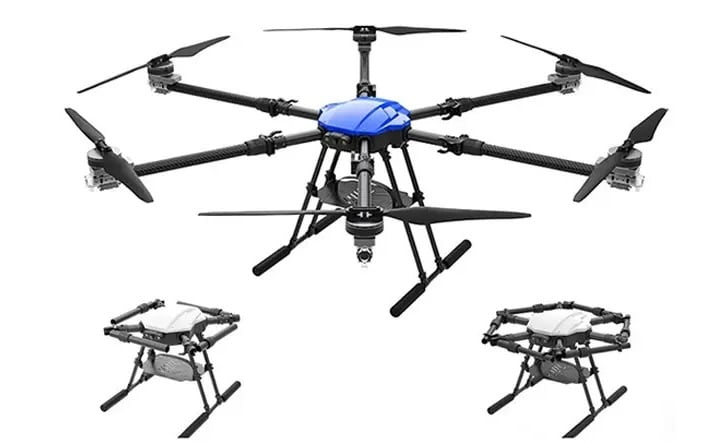
I will not just list names. I will explain how I compare brands, how their design choices affect battery life, and how I make a simple, honest decision when I choose a drone for long missions.
How I compare brands for battery life
When I compare brands, I do not only read “max flight time” on the specs page. I always ask myself three questions.
- How big is the battery in watt-hours27 (Wh)?
- How heavy is the drone and battery together?
- How efficient is the system (motors, props, aerodynamics, software)?
I also look at real user reports. I try to see:
- “Spec flight time” in minutes.
- “Real user flight time” in normal use.
- The gap between them.
The key parameter is energy in watt-hours28 (Wh).
I use a simple formula:
Energy (Wh) = Voltage (V) × Capacity (Ah)
I often do not see Wh printed clearly on some packs, but I can calculate it from S rating and mAh.
Simple Wh example
I imagine a smart drone battery:
- 4S LiPo
- Nominal voltage: 14.8 V
- Capacity: 5000 mAh
Capacity in Ah:
- 5000 mAh ÷ 1000 = 5 Ah
Energy:
- 14.8 V × 5 Ah = 74 Wh
Now I can compare this to another brand that maybe uses a 3S or 4S pack with a different capacity. Wh tells me how much energy is on board, no matter which voltage.
DJI: focus on efficiency and long flight time
In the last years, I have seen DJI push hard on longer flight time with each new generation. Many of their camera drones show flight times above 30 minutes, and the newest flagships go above 45 or even around 50 minutes in ideal tests.
DJI reaches this with several choices:
- Very efficient motors and props that match the drone weight.
- Smart LiPo batteries with good energy density.
- Smooth flight control and power management.
- Good aerodynamics of arms, body, and gimbal.
In real work, I often see this pattern:
- Sub-250 g mini drones: around 20–30 minutes of safe real flight, sometimes more with larger “Plus” batteries.
- Mid-size camera drones: around 25–35 minutes of real flight in mixed use.
- New flagship models: real usable times close to 35–45 minutes when pilots fly in normal, not extreme, ways.
DJI also has a big advantage in smart battery management. The drone and battery talk to each other. They can estimate remaining flight time, show a clear percentage, and trigger return-to-home before the battery gets too low. This does not change the raw energy, but it helps me use that energy in a safer way.
Autel, Skydio, and newer brands with strong battery life
I also watch Autel very closely. Autel drones like the EVO Lite and EVO Lite Plus use high-capacity packs and efficient designs. I often see rated flight times around 35–40 minutes. In the field, many pilots report real flight times above 25–30 minutes in calm conditions.
Skydio takes another path. Skydio focuses more on AI tracking and obstacle avoidance. This heavy computing load uses extra power. Even with efficient batteries, this can reduce raw endurance compared to a simpler camera drone. But Skydio still manages solid flight times in the 30–40 minute class in some models when used in normal, not extreme, tracking modes.
I now also see new players and special models with strong endurance:
- Some long-range fixed-wing or VTOL drones for mapping and inspection.
- Some niche brands that claim over 40 minutes with large batteries.
- New 360° camera drones that try to match DJI and Autel in endurance while adding heavy processing and two sensors.
These brands sometimes use very large batteries, often close to airline limits of 99 Wh per pack, or they use multiple packs in parallel. This can push flight time, but the drone becomes heavier and less portable.
Why “brand with longest battery life” is not a simple winner
Many people ask me: “Which brand is best for battery life, DJI or Autel or someone else?” I always answer in a careful way.
I separate two ideas:
- Battery life per pack (how long one battery keeps the drone in the air).
- Battery life per kilogram (how many minutes I get per kg of system).
A drone with a huge battery can claim “50+ minutes”. But it might be very heavy, hard to travel with, and more complex to fly. Another drone can fly “only” 30 minutes, but it may weigh much less and still be better for many jobs.
I also think about mission type:
- If I do short flights for inspection or social media content, I may not need extreme flight time per pack. I can carry more batteries instead.
- If I do long mapping tasks or big area surveys, I may want maximum endurance, even if the drone is larger and more expensive.
- If I do FPV style or dynamic shots, pure battery life is not my first goal. I care more about power response.
So I do not choose a brand only by max flight time. I choose it by the mix of endurance, image quality, reliability, weight, and price.
How I look at major brand classes for battery life
In this table, I do not list exact models, because they change quickly. I show how I see the brand’s typical endurance focus in the camera and prosumer space.
| Brand class | Endurance focus | Typical flagship class* | My general view on battery life |
|---|---|---|---|
| DJI consumer / prosumer | Very strong, main focus with each gen | 40–50+ min rated in new flagships | Often best mix of efficiency, smart battery, and range |
| Autel camera drones | Strong, close to DJI in many models | 35–40+ min rated in Lite / Max class | Very good alternative with solid endurance |
| Skydio and AI-focused | Good, but shares budget with heavy AI | 30–40 min class in some models | Endurance is good, but main focus is autonomy |
| Smaller budget brands | Mixed; some claim big numbers | Often 20–30 min rated | Specs may look nice, but real times can be lower |
| Industrial VTOL / fixed-wing | Very strong for mapping and survey | 60+ min possible in some systems | Long missions, but larger and more complex systems |
Here I refer to “class” because model names and numbers change over time.
From this view, I normally say:
- For pure camera work and portability: DJI and Autel lead in flight time vs weight.
- For AI tracking and autonomy: Skydio offers good flight time but focuses more on intelligent flight than raw minutes.
- For very long missions: I look at industrial or fixed-wing systems, not only camera drones.
Simple endurance comparison: two imaginary branded drones
Now I show a simple example to make this concrete. I imagine two different branded drones:
- Drone A: high-end camera drone from Brand X.
- Drone B: strong competitor from Brand Y.
Both are multirotor drones, not fixed wings.
Drone A (Brand X)
- Battery: 4S 5200 mAh smart LiPo
- Nominal voltage: 14.8 V
- Capacity: 5200 mAh = 5.2 Ah
Energy:
- Wh = 14.8 × 5.2 = 77.0 Wh
Total takeoff weight (with battery): 900 g
In smooth forward flight in no wind, I assume average power draw is:
- 150 W (this is a realistic level for a compact camera drone).
Average flight time from energy:
- Usable energy: I assume I use 80% for safe flight.
- Usable Wh = 77.0 × 0.8 = 61.6 Wh
- Flight time (hours) = Usable Wh ÷ Power (W)
- = 61.6 ÷ 150 ≈ 0.4107 hours
- Flight time (minutes) = 0.4107 × 60 ≈ 24.6 minutes
So in this model, I expect around 24–25 minutes of safe, repeatable flight with margin.
Drone B (Brand Y)
- Battery: 4S 7000 mAh smart LiPo
- Nominal voltage: 14.8 V
- Capacity: 7000 mAh = 7.0 Ah
Energy:
- Wh = 14.8 × 7.0 = 103.6 Wh
Total takeoff weight (with bigger battery): 1150 g
Higher weight means more power to stay in the air. I assume average power now grows to:
- 190 W
I repeat the steps:
- Usable energy: 103.6 × 0.8 = 82.9 Wh
- Flight time (hours) = 82.9 ÷ 190 ≈ 0.4363 hours
- Flight time (minutes) ≈ 0.4363 × 60 ≈ 26.2 minutes
So Drone B has a much bigger battery and is heavier. It only gains around 1.6 minutes of real safe flight time. This is a very small benefit when I think about cost, weight, and handling.
This simple example shows how I see some “long flight time” marketing. The brand may put a huge battery on a drone to show a nice number, but the real gain in minutes is not always great.
How I match brand choice to real missions
When I help a customer choose a drone, I do not only ask “which brand has longer battery life.” I also ask:
- What type of work do you do?
- How far do you fly from home point?
- How many batteries will you carry?
- Do you need redundancy and dual-battery systems?
- Do you need AI tracking29 or advanced autonomy?
If the main goal is maximum time in the air30 per pack, I usually guide them to:
- High-efficiency camera drones from leading brands with smart batteries.
- Or specialized mapping and industrial platforms with large packs or hybrid power.
If the main goal is strong AI, simple control, and safety, I may accept slightly lower battery life if the drone is much smarter.
How can I extend my drone’s battery life?
Drone batteries degrade quickly without proper care. Shorter battery life leads to more frequent charging, reduced efficiency, and higher replacement costs. Simple habits and smart tech use can extend battery performance and lifespan.
You can extend drone battery life by avoiding full discharges, not flying in extreme temperatures, removing excess payload, updating firmware, and using balanced charging. Reducing flying speed and avoiding aggressive maneuvers also conserves energy. Regular calibration and proper storage extend battery health over time.
I see these rules work in real life. I often fly the same drone before and after I optimize weight, props, and flight style. The difference is real and easy to feel. I will now share my method in a simple, step-by-step way and use clear numbers.
The mindset: “less stress, more minutes”
When I want more flight time, I do not start with the battery. I start with the whole system. My goal is to reduce stress on the pack in every phase:
- On the bench
- During charging
- In the air
- During storage
Less stress means:
- Lower average current
- Lower peak current
- Less heat
- Slower aging
This gives me both longer minutes per charge and more total cycles in the battery’s life.
Reduce weight wherever I can
Every gram that I remove from the drone helps the battery. Oscar Liang often reminds pilots to remove extra TPU parts, large mounts, and heavy accessories when they want longer flight time. I see the same thing in my own tests.
What weight does to current draw
If I increase all-up weight, the motors must create more thrust. More thrust needs more power:
Power (W) = Voltage (V) × Current (A)
At a fixed voltage, more power means more current. So heavier weight means more current. More current drains the battery faster and raises heat.
I use a simple rule: even a 10–15% weight reduction can give me a clear increase in flight time for the same battery.
I compare two versions of the same 5-inch quad:
- Version A: 650 g all-up weight
- Version B: 750 g all-up weight (extra 100 g of GoPro and TPU)
Both use the same 6S 1500 mAh LiPo:
- Capacity: 1500 mAh = 1.5 Ah
- Usable capacity: 1.5 × 0.8 = 1.2 Ah
From tests, I see:
- Version A average current in cruise: 18 A
- Version B average current in cruise: 23 A
Now I calculate:
Version A:
- Flight time (hours) = 1.2 ÷ 18 ≈ 0.0667
- Flight time (minutes) ≈ 0.0667 × 60 ≈ 4.0 minutes
Version B:
- Flight time (hours) = 1.2 ÷ 23 ≈ 0.0522
- Flight time (minutes) ≈ 0.0522 × 60 ≈ 3.1 minutes
So that extra 100 g costs me almost one full minute. This is a 20–25% loss in flight time with the same battery.
Simple weight optimization31 table
| Component / change | Typical saving (g) | Impact on flight time |
|---|---|---|
| Remove heavy TPU GoPro mount | 30–50 g | Noticeable gain on 4–5″ quads |
| Switch to lighter camera | 20–40 g | Good gain for freestyle and long-range |
| Use shorter wires and cleaner build | 5–15 g | Small but helps total saving |
| Remove decorative LED strips | 5–10 g | Small weight and small power savings |
| Use lighter props of same size | 2–8 g total | Slightly less load, sometimes smoother flight |
When I plan a long flight, I remove everything that I do not really need for that mission.
Fly smoother and avoid constant full throttle
My right hand has a huge effect on battery life. Even with the best battery and lightest frame, I can kill flight time with wild stick moves.
How throttle changes current
When I use a current sensor32 or a smart battery log, I see a clear pattern:
- Hover: lowest current for the given weight
- Smooth forward flight: usually close to hover33 current, sometimes even a bit lower if the drone glides well
- Aggressive climbs, flips, and full throttle: current spikes two to three times higher
If my average current jumps from 12 A to 20 A because of my style, I almost cut my flight time in half.
Simple style comparison
I use a 4S 3000 mAh Li-ion long-range pack:
- Capacity: 3000 mAh = 3 Ah
- Usable: 3 × 0.8 = 2.4 Ah
Case 1: Calm cruising at 8 A:
- Flight time (hours) = 2.4 ÷ 8 = 0.3
- Flight time (minutes) = 0.3 × 60 = 18 minutes
Case 2: Mixed cruising with frequent full throttle at 14 A average:
- Flight time (hours) = 2.4 ÷ 14 ≈ 0.1714
- Flight time (minutes) ≈ 0.1714 × 60 ≈ 10.3 minutes
So my stick habits alone remove almost 8 minutes of flight. The battery is the same. The weather is the same.
Practical flying tips
I follow some simple rules when I want more flight time:
- I avoid long full-throttle climbs34.
- I keep altitude changes smooth and gradual.
- I fly in one direction instead of stopping and starting too often.
- I use a lower speed when I film and rely more on framing than speed.
These habits keep average current low and reduce voltage sag.
Choose the right battery size and chemistry
Many pilots think a bigger battery always means a longer flight. I know this is not always true. There is a “sweet spot” where capacity and weight balance.
Finding the sweet spot for capacity
I use test flights to find this sweet spot. I start with one battery size. I log current and flight time. Then I test a slightly larger and heavier pack. I compare real minutes.
If the larger pack adds only a small amount of flight time but makes the drone feel heavy, I go back to the smaller size.
LiPo vs Li-ion35 for endurance
Oscar Liang explains that LiPo packs are best when I need high current and high C rating, like FPV freestyle. Li-ion packs have much higher energy density but lower discharge rate. They work well for long-range cruising.
Practical rule:
- For racing and freestyle: I use LiPo. I choose capacity and C rating that match my peak current.
- For long-range and cruising: I often use Li-ion. I make sure my drone draws low enough current so I do not over-stress the cells.
Keep voltage in a healthy range
Correct voltage handling36 is one of the most powerful tools I have. It affects both flight time and battery life.
Do not over-discharge in flight
Most LiPo guides agree on a safe voltage range. A normal 1S LiPo cell:
- Fully charged: 4.2 V
- Storage: about 3.8 V
- Recommended minimum in flight: around 3.5–3.6 V per cell under load, then it recovers to about 3.6–3.7 V at rest.
If I push cells closer to 3.2 V or below, I may squeeze a bit more flight time today, but I cut total cycle life. The pack becomes weaker and puffs faster. Over time, my “average” flight time drops because the pack has lost capacity.
So I prefer to land early, not late.
Example: safe landing voltage37 for a 4S pack
I want to know my safe landing voltage for a 4S LiPo:
- Target per cell under light load: about 3.5–3.6 V
- So pack voltage under load: 4 × 3.5 = 14.0 V to 4 × 3.6 = 14.4 V
After landing and resting a few minutes, the pack often recovers to:
- Around 3.6–3.7 V per cell
- So 14.4–14.8 V total
I set my low-voltage alarm or OSD warning to around 3.5–3.6 V per cell. This gives me a clear signal before I damage the pack.
Store at proper storage voltage
Many sources and battery makers say that LiPo packs last longer if I store them at about 3.7–3.85 V per cell, not full. Oscar Liang and many FPV pilots also follow this rule.
I use a simple table for storage voltages:
| Pack type | Cells (S) | Per-cell target (V) | Total storage voltage (approx.) |
|---|---|---|---|
| 1S | 1 | 3.7–3.85 | 3.7–3.85 V |
| 2S | 2 | 3.7–3.85 | 7.4–7.7 V |
| 3S | 3 | 3.7–3.85 | 11.1–11.55 V |
| 4S | 4 | 3.7–3.85 | 14.8–15.4 V |
| 6S | 6 | 3.7–3.85 | 22.2–23.1 V |
Many smart chargers have a “storage” mode that charges or discharges each pack to this range.
If I leave packs full at 4.2 V per cell for days or weeks, they age faster. If I leave them empty, I risk deep discharge. Storage voltage is a safe middle.
Control temperature before, during, and after flight
Temperature is one of the biggest enemies of battery life. Many drone and battery makers talk about this.
Cold temperature
In cold weather:
- Internal resistance rises.
- Voltage sags more under load.
- Usable capacity drops.
So a pack that gives 15 minutes in summer may give only 10–12 minutes in winter.
Practical tips I use:
- I keep packs warm before flight. I use my inside jacket pocket or an insulated bag.
- I do not leave packs in snow or cold ground for long before takeoff.
- I start with a gentle hover to warm the pack slightly, then I fly more normally.
Hot temperature
High heat speeds up chemical aging. If my packs come down too hot to touch, I know I push them too hard.
I try to:
- Allow cool-down between flights.
- Avoid leaving packs in a hot car or under direct sun.
- Avoid charging very hot packs immediately after a flight.
By controlling temperature, I not only protect safety. I also maintain more capacity over months, which maintains flight time.
Use good charging and balancing habits
Charging does not change flight time inside one flight, but it changes long-term health.
Key points drawn from LiPo guides and charger tutorials:
- I use a proper LiPo or Li-ion charger with balance mode.
- I do not exceed 1C–2C charge rate for general use unless the battery maker clearly allows it.
- I always balance charge new packs for the first cycles.
- I watch for cells that drift or show much lower voltage than others.
If I charge too fast or ignore bad balance, I increase heat and stress and lose cycles.
If I have a 4S 1500 mAh LiPo:
- Capacity: 1.5 Ah
At 1C:
- Charge current: 1.5 A
At 2C:
- Charge current: 3.0 A
For maximum life, I often keep daily charging closer to 1C. I use higher rates only when I must fly again quickly and I accept some extra stress.
Summary of my practical checklist
When I want to extend my drone battery life, I use this simple checklist:
- I remove all extra weight that I do not really need.
- I choose a battery size that balances capacity and weight.
- I match chemistry to mission: LiPo for power, Li-ion for long-range.
- I fly smooth and avoid long full-throttle bursts.
- I land before voltage sags too low.
- I store batteries at about 3.7–3.85 V per cell.
- I keep batteries in a comfortable temperature range.
- I charge with a good balance charger at reasonable C rates.
When I follow these steps, I see clear gains in real flight minutes and in total battery lifespan. I also feel more confident, because I know my packs are healthy and predictable.
Does flying speed reduce drone battery time?
Speed thrills, but it might be killing your battery faster than you realize. High-speed flights can drastically reduce flight time, impacting mission success. Understand how speed and energy usage correlate to maximize efficiency.
Yes, faster flying speeds significantly reduce drone battery life. Higher speeds increase motor workload, leading to faster energy consumption. Rapid acceleration and deceleration also strain the battery. For longer flights, maintain moderate speeds and smooth control38 to preserve energy.
In practice, I do not try to fly as slow as possible or as fast as possible. I search for a “sweet spot” speed. At this speed, my drone covers good distance, the camera looks smooth, and the current stays moderate. I will show how I find this point with simple logic and examples.
How speed changes power demand
When my drone flies faster, several things happen at the same time.
- The drone must tilt forward more to move.
- The vertical component of thrust must still carry the weight.
- The horizontal component now fights air drag.
- Drag force grows roughly with the square of speed.
So if I double speed, the drag does not only double. Drag can grow four times. The motors then need more thrust. More thrust means more power. At the same battery capacity, more power means less time.
I always remember this formula:
Power (W) = Voltage (V) × Current (A)
For the same battery voltage, higher power means higher current. Higher current drains amp-hours faster. So flight time drops.
The sweet spot: cruise vs hover vs max speed
I like to think of three simple modes.
- Hover
- Moderate cruise
- High-speed or sport-mode flight
Hover
In hover, the drone must create enough thrust to balance weight. Power mainly goes to lift. There is very little horizontal thrust. In many multirotor drones, hover is already a heavy load, because they cannot glide.
Moderate cruise
When I move forward at a moderate speed39, the drone tilts a bit. Some thrust still carries weight. Some thrust pushes forward. In some conditions, moderate speed can be slightly more efficient for distance than hover, because I cover more ground for a similar or slightly higher current. Many pilots see that gentle forward flight gives more range than climbing in place.
High speed / sport mode
At high speed40, the drone tilts a lot. It must push hard against drag. Motors spin faster. Current can spike to two or three times the hover value. This drains the pack fast and heats it more. One community test on a camera drone showed that full-throttle sport mode can be about 25% less battery efficient than normal mode.
So for best endurance, I avoid the extremes. I do not hover in place all the time, and I do not fly full speed all the time. I cruise steadily.
I use a simple imaginary 4S camera drone example. The drone uses:
- Battery: 4S 5200 mAh LiPo
- Capacity: 5200 mAh = 5.2 Ah
- Usable capacity: 5.2 × 0.8 = 4.16 Ah
From tests or logs, I see three average current values at three speeds:
- Hover at 0 m/s: 12 A
- Cruise at 8 m/s: 14 A
- Sport at 18 m/s: 22 A
Now I calculate flight time in each case.
Hover
Flight time (hours) = 4.16 ÷ 12 ≈ 0.3467 h
Flight time (minutes) = 0.3467 × 60 ≈ 20.8 min
Moderate cruise (8 m/s)
Flight time (hours) = 4.16 ÷ 14 ≈ 0.2971 h
Flight time (minutes) ≈ 17.8 min
High speed (18 m/s)
Flight time (hours) = 4.16 ÷ 22 ≈ 0.1891 h
Flight time (minutes) ≈ 11.3 min
So the same pack in the same drone gives:
- About 21 minutes in hover.
- About 18 minutes at a nice cruise.
- About 11 minutes at full speed.
Now I also think about distance covered:
- Cruise distance = 8 m/s × 17.8 min × 60 s/min ≈ 8544 m
- High-speed distance = 18 m/s × 11.3 min × 60 ≈ 12204 m
So high speed drains the battery faster, but also covers more distance in the same time. I choose based on whether I care more about time in air or distance and coverage.
Table: speed vs current vs flight time and range
Here is a simple summary for this example drone:
| Mode | Speed (m/s) | Avg current (A) | Flight time (min) | Approx range (km) |
|---|---|---|---|---|
| Hover | 0 | 12 | 20.8 | 0 |
| Cruise | 8 | 14 | 17.8 | 8.5 |
| High-speed | 18 | 22 | 11.3 | 12.2 |
I see two clear lessons.
- Yes, higher speed reduces time in the air.
- For range, high speed may still win, if I accept the shorter time.
This is why long-range pilots41 often choose a moderate speed, not maximum speed. They want a good balance between time and distance.
How my flying style changes speed and drain
Flying speed is not only the raw number on the GPS. It is also the way I move.
- If I fly in straight, smooth lines at a fixed cruise speed, current stays stable.
- If I make sudden stops, turns, and climbs, I add many short high-current spikes.
These spikes can raise the average current even at the same average GPS speed.
A test on an FPV quad42 shows this clearly. Oscar Liang shows that less flips, less rolls, and less aggressive moves give more flight time at the same battery and prop size.
So when I plan a long flight:
- I choose a cruise speed that feels comfortable.
- I keep turns wide and smooth.
- I avoid very fast climbs and drops.
This way, I keep the real average current low, even if the GPS speed does not look slow.
I use a simple FPV example:
- Long-range quad with 4S 3000 mAh Li-ion (usable 2.4 Ah).
- Average GPS speed: 12 m/s in both cases.
Case A: Smooth cruise
- No hard tricks, only gentle turns.
- Average current: 7 A.
Flight time:
- Hours: 2.4 ÷ 7 ≈ 0.3429
- Minutes: ≈ 20.6 minutes
Case B: Sporty style
- Frequent full throttle climbs and sharp turns.
- Average current: 11 A.
Flight time:
- Hours: 2.4 ÷ 11 ≈ 0.2182
- Minutes: ≈ 13.1 minutes
GPS speed is the same. Style is different. I lose more than 7 minutes just because of harder moves. So speed and style always go together.
Practical tips for picking the right speed
I use these simple rules in my own flights.
-
For maximum time in the air
- I fly slow to moderate.
- I avoid sport mode unless I really need it.
- I keep my lines smooth and avoid sharp sticks.
-
For maximum range in one flight
- I choose a moderate cruise speed, not maximum.
- I test a few speeds in calm weather and log current.
- I pick the speed that gives the best distance per watt-hour.
-
For dynamic shots43 or FPV fun
- I accept shorter battery time as the cost of strong power and speed.
- I still land with enough margin to protect the pack.
In all cases, I remember one basic truth: higher speed needs more power. So yes, flying fast reduces drone battery time. My goal is not to avoid speed completely. My goal is to use speed in a smart way that matches my mission and respects my battery.
How weather conditions44 impact drone battery performance?
Many flyers ignore weather before taking off. Cold, heat, or wind45 can drain batteries fast, risking early landings or failures. Factoring in weather helps plan better and protects drone performance.
Cold weather reduces battery efficiency and capacity, while hot conditions may trigger thermal limits. Windy environments require more motor output, accelerating power drain. Humidity doesn’t affect batteries much but may affect electronics. Always monitor weather to optimize performance and flight safety.
I see this every season. The same pack feels “lazy” in winter and “angry” in summer. I will now break down the main weather factors, use simple numbers, and show how I adjust my habits for each one.
Temperature: cold and heat both hurt in different ways
Most lithium battery guides say that LiPo and Li-ion cells work best in a moderate range, roughly from about 0°C to 35°C, with many makers rating -20°C to 60°C as the absolute operating limits. I try to stay near the middle, not at the edges.
Cold weather effects
In cold weather46, several things happen inside the cells:
- The chemical reactions slow down.
- Internal resistance rises.
- Voltage sags more under load.
- Usable capacity drops for that flight.
Tests and articles show that below about 10°C I start to see weaker punch and shorter run time, and below about -7°C the performance loss becomes serious. Some FPV pilots even report losing almost half their practical capacity in very cold conditions.
So the same 4S pack that feels strong at 20°C can feel tired at -5°C.
I imagine a 4S 5000 mAh LiPo:
- Capacity: 5000 mAh = 5 Ah
- Usable capacity at 20°C: 5 × 0.8 = 4 Ah
At 20°C, average current in cruise is 18 A:
- Flight time (hours) = 4 ÷ 18 ≈ 0.222 h
- Flight time (minutes) ≈ 13.3 min
Now I take the same drone at -5°C. Internal resistance is higher and the pack sags more, so I can only use about 70% of rated capacity before voltage droops too low under load.
- Usable capacity at -5°C ≈ 5 × 0.7 = 3.5 Ah
Due to thicker air and maybe some wind, average current goes up a bit, say to 19 A.
- Flight time (hours) = 3.5 ÷ 19 ≈ 0.184 h
- Flight time (minutes) ≈ 11.0 min
I lose over 2 minutes, almost 20% of my flight time, just from cold.
How I protect batteries in the cold
Cold use does not always cause permanent damage if it is short. But I still want to treat my packs well. I do things like:
- I store and transport packs in a warm bag or jacket pocket.
- I do a short, gentle hover to warm the cells before pushing harder.
- I avoid charging batteries when they are below 0°C.
- I keep my low-voltage alarm conservative because sag is stronger.
Some FPV brands now even sell heated battery bags to keep packs in the ideal range before flight. The idea is simple: warm packs give more punch and longer time.
Hot weather effects
Heat is a slower, more silent enemy. Articles on lithium batteries warn that high temperatures accelerate aging and can increase risk of swelling and thermal runaway in extreme cases.
In hot weather:
- Internal resistance is lower, so punch can feel strong.
- Chemical side reactions also speed up, so the battery ages faster.
- Cells can swell if stressed hard at high temperature.
- Electronics in the drone can overheat.
Many sources recommend storage and use in the range of about 15–25°C for best life, and they warn that long exposure near 60°C is dangerous.
I look at a 6S LiPo that normally comes down warm but safe. On a cool day, the pack lands at about 35°C after a hard flight. On a hot summer day, with ambient temperature near 35°C, the same flight can push pack temperature above 55–60°C.
At that level:
- The pack feels very hot to the touch.
- Gas generation inside the cells can cause swelling.
- Repeated use like this shortens life and can lead to failure.
So in hot weather I:
- Reduce punch-outs and long full-throttle pulls.
- Allow more time between flights.
- Keep packs out of direct sun when not flying.
- Do not leave batteries in a hot car.
Wind: invisible force that drains the battery
Wind is one of the most obvious weather factors for drone pilots. Guides and training materials often say that strong wind shortens flight time and can make flight unsafe. Research on drone energy use also shows higher consumption when flying against the wind.
When I fly in wind:
- Flying against the wind needs more power.
- Hovering in one place needs more motor corrections.
- Gusts cause spikes in current.
- Return-to-home against wind is the most critical part.
I imagine a mapping drone[^484] that needs about 150 W in calm air at 10 m/s.
In calm air:
- Average power: 150 W
- Battery: 4S 5200 mAh (77 Wh, 80% usable = 61.6 Wh)
Flight time:
- Hours = 61.6 ÷ 150 ≈ 0.411 h
- Minutes ≈ 24.7 min
Now I add a strong headwind that reduces ground speed and forces the drone to work harder. Power rises to 200 W to hold similar airspeed.
In headwind leg:
- Hours = 61.6 ÷ 200 ≈ 0.308 h
- Minutes ≈ 18.5 min
So in heavy headwind, effective flight time for a route can drop by more than 6 minutes. If I do a long “out and back” mission, I must remember that the return leg against the wind will draw more power and take longer. I must keep enough margin.
On the other hand, flying with the wind can increase range, but I must be sure I can still return.
Wind and flight planning tips
In wind, I follow some basic rules:
- I keep my mission shorter than the spec flight time, often to two-thirds, as some safety guides suggest.
- I try to start my route upwind, so I return with a tailwind.
- I fly at lower altitude when safe, because wind is often stronger higher up.
- I cancel or delay flights when gusts are too strong for the drone.
These simple choices protect both the battery and the aircraft.
Humidity, rain, and moisture
Humidity does not change battery chemistry much by itself because drone packs are sealed. But high humidity47 and rain increase risk for the electronics that manage the battery and power system. Some training material also warns that humidity can affect sensors.
In wet conditions:
- Water can bridge contacts and cause short circuits.
- Corrosion can grow over time on connectors and PCBs.
- Moisture can make ESCs or BECs fail, which then can overload or cut power from the battery.
So, for battery safety and long-term health, I avoid:
- Flying in heavy rain.
- Landing on wet grass or puddles with exposed electronics.
- Charging batteries in damp areas where connectors can corrode.
If I must fly in light mist or high humidity for work, I use proper weather protection, conformal coating, and regular inspection of power connectors.
Air density, altitude, and pressure
Air density decreases with altitude and higher temperature. Less dense air means:
- Props must spin faster to make the same thrust.
- Motors draw more current.
- Flight time for the same battery drops.
Some drone training texts mention this effect when they talk about high-altitude flying. The effect is stronger for heavy drones with large props, such as industrial and mapping systems.
For example, a drone that needs 16 A to hover at sea level might need 18–19 A at high altitude. If I use the same capacity, flight time drops by around 10–15%. I plan for this when I fly in mountains or high plains.
Summary table: key weather effects on battery
| Weather factor | Main effect on battery and drone | Result for flight time | What I do about it |
|---|---|---|---|
| Cold temperature | Higher internal resistance, more sag, less usable capacity | Shorter flights, weak punch | Keep packs warm, gentle takeoff, conservative voltage |
| Hot temperature | Faster aging, swelling risk, stress on cells | Flight time may stay similar now, but life cycle shrinks | Avoid sun, allow cool-down, avoid heavy stress |
| Strong wind | More power needed to hold position or move upwind | Shorter and less predictable flights | Shorten routes, fly upwind first, keep big safety margin |
| Humidity / rain | Risk to electronics and connectors | Possible sudden power loss | Avoid rain, protect electronics, inspect connectors |
| High altitude | Lower air density48, more current for same thrust | Shorter flights, less margin | Reduce payload, plan shorter missions |
How I turn weather into a real plan
When I plan a serious flight, I do not only look at my battery spec. I also check:
- Air temperature at my flight time.
- Forecast wind speed and gusts.
- If there is rain, fog, or very high humidity.
- Altitude of the location.
Then I adjust:
- Expected flight time (usually downwards).
- Route length and pattern.
- Number of spare batteries I take.
- My voltage warning and landing margin.
When I respect the weather, my drone battery feels much more “honest”. I get fewer surprises, fewer sudden voltage drops, and many more successful missions.
How often should I replace a drone battery?
Batteries don’t last forever, but many users ignore signs of wear. Using degraded batteries can result in crashes, loss of signal, or sudden power failure mid-air. Knowing replacement cycles ensures reliability and safety.
Replace drone batteries after 200–300 full charge cycles or when flight time drops noticeably. Signs like swelling, overheating, or slow charging indicate battery wear. Regularly monitor voltage and internal resistance49 using a smart charger or app for battery health.
I do not wait for a pack to fail in the air. I use a mix of visual checks, flight time logs, and simple measurements. This way I can retire batteries at the right moment, not too early and not too late.
Signs that tell me a drone battery is near the end of life
I first look at the battery itself. I do not need tools for this step. I only use my eyes and hands.
Key warning signs:
- The pack looks swollen or puffy.
- The plastic wrap is torn, melted, or badly scratched.
- The pack feels soft in places when I press gently.
- The connector or wires are burnt, loose, or discolored.
- The balance lead is broken or has exposed metal.
Most LiPo safety guides say that swollen or physically damaged packs50 should not be used for flight. They may still hold a charge, but they are unsafe. They can vent or catch fire under stress. So if I see swelling, I retire the pack from flying and follow safe disposal rules.
I also watch how the pack behaves in the air:
- I fully charge the pack.
- I fly in a normal way.
- I watch voltage and feel how power responds.
Warning flight signs:
- Voltage drops very fast at the start of flight.
- The drone feels weak and loses punch.
- Voltage sags deep under load, even with moderate throttle.
- The low-voltage alarm comes much earlier than it used to.
If I know that this same drone and battery used to fly, for example, 8 minutes, and now I only get 5–6 minutes with the same style and conditions, I know the pack has lost a chunk of capacity.
How I think about cycle life
Most general LiPo sources say that a well-treated LiPo can last around 150–300 cycles before it loses a big part of its capacity. Some high-quality packs can go further. Some cheap or abused packs die much earlier.
But “cycle” can be a bit fuzzy. One cycle is usually:
- A full charge and discharge from about 100% to around 20–30%.
If I only use half the capacity and recharge, that is closer to half a cycle.
I also know that heavy FPV use is harder on packs than gentle camera use. Full-throttle pulls at high C raise heat and stress. Long storage at full charge, or hot storage, also speeds up aging.
So I use this table as a rough guide, not as a strict rule.
| Use case | Chemistry | Typical cycles in good care | When I often replace in real life |
|---|---|---|---|
| FPV racing / hard freestyle | LiPo | 100–200 | 70–150 cycles |
| General FPV / mixed use | LiPo | 150–250 | 120–200 cycles |
| Camera drones (smart packs) | LiPo | 200–300+ | 150–250 cycles |
| Long-range cruising | Li-ion | 200–400 | 200–350 cycles |
This table is based on common LiPo guidance and field reports, not a fixed promise. If I treat my packs gently, I may get more cycles. If I push them hard, I may get fewer.
How I measure capacity loss51 with flight time
I do not always have a professional battery tester. But I always have my drone and a timer. Flight time is one of the simplest ways to track capacity loss.
I do this:
- When the pack is new, I record a “reference flight”.
- I note: battery size, drone weight, route, wind, and flying style.
- I land at my normal safe voltage, for example around 3.6–3.7 V per cell at rest.
- I write down the flight time.
Later, after many cycles, I repeat.
If my original safe flight time was 12 minutes and now I only get 9 minutes under the same conditions, then capacity loss is roughly:
- Capacity drop ≈ (Old time − New time) ÷ Old time
- = (12 − 9) ÷ 12 = 3 ÷ 12 = 0.25 = 25%
So I know that this pack has lost about a quarter of its useful capacity.
For normal hobby use, a 20–30% loss may still be acceptable. For critical work, like professional filming or inspection, I may choose to retire or downgrade the pack earlier.
I sometimes make a small table for key packs.
| Pack ID | Drone | New flight time (min) | Current flight time (min) | Approx capacity loss | Action |
|---|---|---|---|---|---|
| 6S-1500-1 | 5″ FPV | 4.5 | 3.5 | (4.5−3.5)/4.5 ≈ 22% | Still use, but monitor |
| 6S-1500-2 | 5″ FPV | 4.5 | 2.9 | (4.5−2.9)/4.5 ≈ 36% | Retire from hard flights |
| 4S-5000-A | camera | 18 | 13 | (18−13)/18 ≈ 28% | Retire from paid jobs |
This gives me a clear, simple view.
How I use internal resistance and cell balance
Some smart chargers and smart batteries can show internal resistance (IR) for each cell. IR is a measure of how much the cell resists current flow. As cells age, IR rises.
I do not treat IR as a perfect number, but I use it as another hint.
Basic logic:
- New LiPo cells often have low IR, for example a few milliohms per cell for mid-size packs.
- As the pack ages, IR increases.
- If one cell has much higher IR than the others, that cell is weak.
I also check cell balance. In a healthy pack, all cells stay close in voltage.
Many LiPo guides suggest that a difference of more than about 0.05–0.1 V between cells at rest is a warning sign. If I see one cell consistently lower, and balance charging cannot fix it, I know the pack is near end of life.
So my rules are:
- If one cell is always much lower than others after charging or resting, I retire the pack from serious use.
- If IR jumps sharply from one check to the next, I watch the pack closely.
- If IR is high and I also see swelling or big sag, I stop flying that pack.
When I retire early for safety
Sometimes a battery still holds decent capacity, but I still decide to retire it early. I do this when I see safety risk52.
I retire or downgrade a pack when:
- The pack is swollen or physically damaged.
- The outer wrap is badly torn and I see exposed foil.
- The pack has been in any crash that bent it or pierced it.
- The pack has been shorted or accidentally over-charged.
- One or more cells keep drifting badly in voltage.
In these cases, I do not ask “how many more cycles can I get”. I only ask “is it worth the risk of a fire or crash”. The answer is usually no.
I sometimes keep such packs for bench tests, LED strips, or low-current ground use, but I store them in a safe fire-resistant container and never leave them unattended when in use or charging.
Simple decision checklist
To answer “how often should I replace a drone battery?”, I do not count cycles in a strict way. I use this checklist:
- Has the pack lost around 20–30% of its original flight time?
- Does voltage sag much more than before under normal load?
- Do I see swelling, damage, or strange smells?
- Are there big and repeated differences between cell voltages?
- Is internal resistance much higher, or is one cell clearly weaker?
- Do I use this pack for paid or critical missions?
If I answer “yes” to several of these, I plan to replace or downgrade the pack53 soon. For casual flying, I may squeeze some more gentle cycles. For professional work, I prefer to retire packs earlier and keep a strong safety margin for both the drone and the people around it.
What are the best drones with long battery life in 2025?
Choosing a drone with weak battery life limits professional applications. You may end up spending more on backup batteries or face reduced productivity. Invest in models known for endurance to get the most flight time per session.
Top drones in 2025 for battery life include the DJI Matrice 350 RTK54 (55 min), Autel EVO Max 4T55 (45 min), Freefly Alta X (up to 50 min with custom payload), and Parrot Anafi AI (32 min). These are ideal for industrial and commercial use.
I also know that the “best” drone for me is not just the one with the largest number on the spec sheet. I care about camera needs, regulations, weight, and how often I fly. I will explain how I judge long battery life and which models stand out in 2025 for different users.
How I judge long battery life in 2025
When I compare drones, I do not trust only “max flight time in no wind”. That number is useful, but it is not the full story. I use three simple ideas.
- Battery energy in Wh (watt-hours).
- Realistic flight time (not just lab numbers).
- Efficiency: minutes per Wh and minutes per kilogram.
Battery energy formula is very simple:
Energy (Wh) = Voltage (V) × Capacity (Ah)
This comes directly from basic battery theory and is the same logic we use when we design LiPo packs for FPV drones. If I know the battery is, for example, a 4S 5200 mAh pack:
- 4S nominal voltage ≈ 14.8 V
- Capacity 5200 mAh = 5.2 Ah
- Energy ≈ 14.8 × 5.2 ≈ 77 Wh
A drone with a 77 Wh pack and efficient motors will fly longer than a similar drone with a 60 Wh pack, if weight is not much higher. I then look at how the brand uses that energy.
For realistic flight time, I usually take:
- About 60–70% of the advertised “no-wind” maximum for normal use.
- A bit less if I fly in wind or in sport mode.
This matches real pilot reports. For example, many DJI Mini 4 / Mini 5 class users report around 25–30 minutes of real-world flight, even when DJI lists a higher number.
Finally, I think about efficiency. A heavy drone with a huge battery can show a big flight time, but it may be hard to travel with. A lighter drone with slightly less time may be better for daily jobs.
Top consumer and prosumer drones with long flight time
Now I look at some leading drones in 2025, from the view of battery life and efficiency.
DJI Mavic 4 Pro56 – flagship endurance and image quality
DJI lists the Mavic 4 Pro with a maximum flight time of about 51 minutes under ideal test conditions. Reviews confirm that real-world usable time is lower but still very strong. One long-term test notes that the drone still shows over 30 minutes left at 71% battery in typical flying, which suggests about 45–50 minutes total in mild conditions.
In my view, the Mavic 4 Pro is one of the top picks in 2025 when I want:
- Very long flight time per pack.
- Large sensor and high-end camera (Hasselblad system).
- Strong transmission and stability in wind.
It is not a light toy. It weighs over 1 kg and needs registration in many countries. So I see it as a professional long-flight camera platform, not a casual travel drone.
DJI Air 3S57 and Mavic 3 Pro class – strong balance of endurance and size
Updated long-range guides and reviews in 2025 place DJI Air 3S and Mavic 3 Pro in the long-flight group, often quoting around 45 minutes of maximum flight time. In calm conditions with standard batteries, these drones often deliver around 30–35 minutes of real filming, sometimes a bit more with careful flying.
I like these models because they balance:
- Endurance close to 40–45 minute class.
- Strong camera options (dual-camera or multi-camera systems).
- More compact size than the very largest flagships.
If I am a serious content creator but do not want the biggest airframe, this class often gives the best minutes-per-kilogram balance.
DJI Mini 5 Pro – long flights in a sub-250 g body
Recent “best drone 2025” lists often place DJI Mini 5 Pro at the top overall. It is under 250 g, which helps pilots avoid heavy regulations in many countries, and it still offers mid-30-minute class flight times in normal use when paired with its high-capacity batteries.
From a battery point of view, this is impressive:
- Very small pack.
- High energy density smart LiPo.
- Efficient props and motors.
If I travel a lot, or if I want long flights with minimal weight, I find this sub-250 g range very attractive. I do not get the extreme endurance of the Mavic 4 Pro, but I get very good time for such a light drone.
Autel EVO Lite58 and EVO Lite Plus – 40 minute class endurance
Autel’s EVO Lite series is still a strong option for long battery life in 2025. The official specs list a max flight time of about 40 minutes and hover time around 38 minutes, with a battery around the 68–77 Wh class. Real-world reports often show around 28–32 minutes of practical filming per pack.
Autel also offers EVO Lite Enterprise versions, with the same “up to 40 minutes” endurance promise, but more professional payloads and features.
I see Autel as a good choice when I want:
- Competitive flight time near DJI Air and Mavic 3 levels.
- A non-DJI ecosystem.
- Strong low-light and color performance.
Antigravity A159 – 360° creativity with up to 39 minutes
In late 2025, the Antigravity A1 arrived as a new 360-degree drone from Insta360’s Antigravity brand. Reviews mention flight times from about 24 up to 39 minutes depending on which battery is used and whether the drone stays under 250 g.
This drone is special because:
- It carries a full 360° 8K camera.
- It uses immersive FPV-style goggles and a motion controller.
- The body and landing gear are designed so the camera sees only clean 360 video.
From a battery standpoint, it is quite efficient for a 360 platform. It shows that modern high-density packs and good aerodynamics can support advanced cameras without destroying flight time. But it has a high price, so I see it as a special tool for creators, not a beginner drone.
Enterprise and industrial drones with long endurance
For many of my B2B customers, “long battery life” means something different. They do not think about 30 or 40 minutes. They think about one hour, two hours, or even more for mapping and inspection60.
Multirotor enterprise drones61 – 40–45 minute class
In the multirotor enterprise space, I see several systems around 40–45 minutes per battery set:
- Autel EVO Max 4T: official specs mention up to 42 minutes of max flight time on one pack, with strong wind resistance and multiple cameras including thermal.
- EVO Lite 6K Enterprise: Autel promotes around 40 minutes of “industry-leading” endurance for this inspection and public safety drone.
Real-world use may be closer to 25–35 minutes, especially with heavy payloads or wind, but this still gives strong coverage for inspection routes and search missions.
Fixed-wing and VTOL drones – one hour and beyond
If I move away from normal camera drones and into fixed-wing or VTOL industrial drones, endurance jumps much higher. Long-range and industrial guides in 2025 show:
- Many consumer “long-range” drones in the 30–45 minute band.
- Specialized fixed-wing mapping drones near 60 minutes on batteries.
- Hybrid or large gas-electric VTOL systems even reaching multi-hour endurance, like the JOUAV CW-30E with up to 8 hours in some configurations.
From a battery design view, this shift is natural. Fixed-wing aircraft use lift from wings, so they need less power to stay in the air. They can stretch every Wh much further than a quad can.
How I match long-flight drones to real use cases
When someone asks me “What is the best long-battery-life drone in 2025?”, I never give a single name. I always ask what they want to do.
- If I am a professional filmmaker and I want maximum time per take with a top camera, I look at DJI Mavic 4 Pro or similar flagships. They give me around 30–40 minutes of solid real-world filming with huge sensors.
- If I am a serious hobbyist or content creator who travels a lot, I often look at DJI Air 3S, Mavic 3 Pro, or Autel EVO Lite. These give strong 30+ minute real flights in smaller, easier-to-pack frames.
- If I want to stay sub-250 g and avoid heavy regulations, I consider Mini 5 Pro62 class drones. I accept a bit less endurance than the big flagships, but I still get good mid-30-minute-class flight with much less weight.
- If I need creative 360° shots and do not mind a higher price, I can look at Antigravity A1, which offers 24–39 minutes and a very different style of capture.
- If I am an industrial user and I care about area coverage, I study enterprise multirotors63 with 40–45 minutes or fixed-wing / VTOL platforms with 60+ minutes or even multi-hour endurance.
In every case, I remember that the real battery performance depends on how I fly, how I load the drone, and how I treat the packs. The best drone on paper can still give poor results if I fly in heavy wind, push sport mode all the time, or store batteries badly.
So in 2025, the “best” drones with long battery life are easy to name, but choosing among them still needs one key step. I must match the battery energy and flight time64 with my real mission, my travel style, and my budget. Only then does the long flight time on the spec sheet turn into real extra minutes in the air for me.
Conclusion
I see now that drone battery life is not a mystery. It is the result of clear factors: weight, speed, weather, chemistry, and how I treat each pack day after day. When I understand these links, I plan safer flights, I protect my investment, and I avoid rude surprises in the air. At ViBMS, my team and I design and manufacture packs exactly for these real conditions, not for brochure numbers. If you need custom drone batteries65 or want to optimize an existing platform, you can reach me and we can build a long-life solution together.
-
Payload significantly impacts flight time; knowing this can optimize your drone’s performance. ↩
-
Understanding average battery life helps in planning flights and avoiding unexpected landings. ↩
-
Motor efficiency is crucial for maximizing flight time; learn how to select the best motors. ↩
-
Drone weight affects energy consumption; learn how to balance weight for optimal flight time. ↩
-
Flight speed can drastically change battery life; knowing this helps in mission planning. ↩
-
Different battery chemistries affect performance and longevity; explore to choose the best for your needs. ↩
-
Weather conditions can impact flight time; learn how to adapt your flying to different environments. ↩
-
Battery management systems can extend battery life; explore their benefits for better drone operation. ↩
-
Maintaining battery health ensures longer flight times; discover tips for prolonging battery life. ↩
-
Knowing average current draw is essential for estimating flight time accurately. ↩
-
Voltage plays a critical role in battery efficiency; understanding it can enhance your drone’s performance. ↩
-
Understanding C rating helps ensure you choose batteries that can handle your drone’s power needs. ↩
-
Flying style can drastically change battery consumption; learn how to optimize your flying habits. ↩
-
Battery capacity is key to understanding how long your drone can fly; explore this to make informed choices. ↩
-
Different drones have varying battery lives; understanding this helps in selecting the right drone for your needs. ↩
-
Understanding mAh is crucial for evaluating battery capacity and performance. ↩
-
Learn why LiPo batteries are popular for drone applications. ↩
-
Discover the factors that influence drone flight time calculations. ↩
-
Explore the characteristics that make drones suitable for long-range flights. ↩
-
Explore the advantages of Li-ion batteries for long-range drone flights. ↩
-
Understand how LiHV batteries enhance drone performance. ↩
-
Understanding energy density is key to evaluating battery efficiency. ↩
-
Learn about the impact of battery aging on flight times and reliability. ↩
-
Find out which brands excel in battery performance for drones. ↩
-
Explore why DJI is a leader in drone battery technology. ↩
-
Discover how Autel drones stack up against competitors in battery life. ↩
-
Learn to calculate watt-hours to compare battery energy capacities. ↩
-
Discover how to use watt-hours for effective battery comparisons. ↩
-
Understand AI tracking technology to enhance your drone’s operational capabilities. ↩
-
Explore the key factors that influence drone flight duration for better planning. ↩
-
Learn weight optimization techniques to improve your drone’s flight time and efficiency. ↩
-
Learn how current sensors can help monitor and improve your drone’s energy efficiency. ↩
-
Understanding hover dynamics is essential for effective drone operation and energy management. ↩
-
Learn why avoiding full-throttle climbs can help conserve battery life during flights. ↩
-
Understand the pros and cons of LiPo and Li-ion batteries to choose the right one for your needs. ↩
-
Learn about voltage handling to maintain battery health and extend flight time. ↩
-
Discover the safe landing voltage to prevent battery damage and ensure longevity. ↩
-
Discover how smooth control techniques can enhance battery life and flight performance. ↩
-
Exploring this resource will help you understand how moderate speed can enhance drone efficiency and battery life. ↩
-
This link will provide insights into the trade-offs of flying drones at high speeds and their impact on battery performance. ↩
-
This resource shares strategies used by long-range pilots to maximize flight time and distance. ↩
-
Discover the advantages of FPV flying and how it can enhance your drone experience with this insightful resource. ↩
-
This link provides tips and techniques for capturing stunning dynamic shots using your drone. ↩
-
Understanding the impact of weather on drone performance is essential; this resource offers comprehensive insights. ↩
-
Learn about the effects of wind on drone flight time and how to adjust your flying strategy accordingly. ↩
-
Explore how cold weather impacts battery performance and learn how to mitigate its effects with this informative link. ↩
-
This link explains how humidity affects drone electronics and offers tips for protecting your equipment. ↩
-
Understanding air density’s impact on drone performance is crucial for high-altitude flying; this resource provides valuable insights. ↩
-
Learn how to effectively monitor your drone’s battery health for safer flights. ↩
-
Find out the best practices for dealing with damaged batteries to ensure safety. ↩
-
This resource will guide you on how to accurately assess your battery’s capacity. ↩
-
Understanding safety risks can help you make informed decisions about battery usage. ↩
-
This link provides criteria for deciding when to retire a battery for safety. ↩
-
Explore the capabilities of this drone, known for its impressive battery life. ↩
-
Learn about the features that contribute to the long battery life of this model. ↩
-
Discover why the Mavic 4 Pro is considered a top choice for endurance and quality. ↩
-
Find out how this drone balances performance and battery efficiency. ↩
-
Explore the features that make the EVO Lite a strong contender for endurance. ↩
-
Learn about this innovative drone and its impressive battery capabilities. ↩
-
Explore how drones enhance efficiency in mapping and inspection with long battery life. ↩
-
Discover top enterprise drones designed for extended flight times in professional settings. ↩
-
Find out why Mini 5 Pro drones are perfect for those who want lightweight options without compromising on flight time. ↩
-
Discover how enterprise multirotors can enhance efficiency and coverage in industrial settings with their impressive flight times. ↩
-
Understand the critical relationship between battery energy and flight time to optimize your drone’s performance for specific missions. ↩
-
Explore the benefits of custom drone batteries designed for specific conditions, ensuring optimal performance and longevity ↩