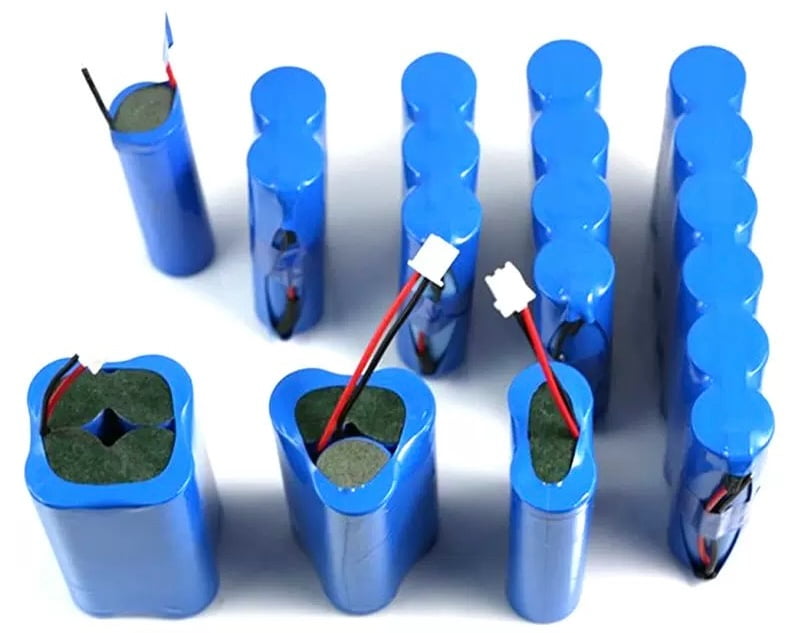
Connecting batteries in series is a critical technique for achieving higher voltage outputs, essential for industries such as aerospace, EVs, medicinae machinas, and energy storage. When done correctly, it can significantly enhance the performance of battery systems. tamen, improper connections can lead to inefficiency, safety hazards, and even device failure.
To connect batteries in series, link the negative terminal of one battery to the positive terminal of the next. Continue this pattern until all batteries are connected. deinde, connect a cable from the negative terminal of the first battery to your application and another cable from the positive terminal of the last battery. This configuration increases the voltage while keeping the capacity (Ah) the same. It’s commonly used in advanced applications such as EVs, fuci, ac medicinae machinas.
Now that you understand the basics, let’s dive deeper into each step and explore the specifics for different battery types, including Li-ion, LiFePO4, LiPo, and semi-solid-state batteries.
1. What is a Series Connection?
Need higher voltage for your applications but unsure how to configure your batteries?
Misconfiguring batteries can lead to performance issues or safety risks.
Learn how series connections can effectively increase voltage while maintaining capacity.
A series connection involves linking the negative terminal of one battery to the positive terminal of the next. This setup increases the total voltage while keeping the battery capacity (Ah) constant. Exempli gratia, two 12V, 100Ah batteries in series create a 24V, 100Ah system. It is widely used in applications requiring higher voltage, such as electric vehicles, fuci, et industriae apparatu. Proper execution ensures efficiency, salus, and longevity of the battery system.
Understanding Series Connections for Different Battery Types
While the principle of series connections applies universally, specific considerations exist for different battery chemistries:
-
Li-ion batteries: Widely used, they require that all batteries in series have the same state of charge (SOC) and capacity to prevent imbalance, which can lead to overcharging or over-discharging.
-
LiFePO4 batteries: Known for safety and longevity, they have a lower nominal voltage per cell (3.2V vs. 3.7V for li-ion), affecting the number of cells needed for a desired voltage.
-
Lipo batteries: High energy density makes them suitable for performance applications, but they require careful handling and protection circuits to prevent thermal runaway.
-
Semi-solid state batteries: As an emerging technology, follow manufacturer guidelines for series connections to ensure optimal performance and safety.
Calculating Voltage, capacitas, and Energy in Series Connections
In series connections, the total voltage is the sum of individual battery voltages, while capacity remains that of a single battery. Energy (watt-horas) is calculated as total voltage multiplied by capacity.
Exemplum 1: Li-ion cells
-
Individual cell: 3.7V, 50Ah
-
For ~12V system: 3 cells in series → 3 × 3.7V = 11.1V, capacity = 50Ah, energy = 11.1V × 50Ah = 555Wh
-
For ~48V system: 13 cells in series → 13 × 3.7V = 48.1V, capacity = 50Ah, energy = 48.1V × 50Ah ≈ 2405Wh
Exemplum 2: Cellulae LiFePO4
-
Individual cell: 3.2V, 100Ah
-
For ~12V system: 4 cells in series → 4 × 3.2V = 12.8V, capacity = 100Ah, energy = 12.8V × 100Ah = 1280Wh
-
For 48V system: 15 cells in series → 15 × 3.2V = 48V, capacity = 100Ah, energy = 48V × 100Ah = 4800Wh
In usu, manufacturers often use pre-configured battery modules. For instance, connecting four 12V, 100Ah li-ion batteries in series yields a 48V, 100Ah system with 4800Wh.
Comparing Series and Parallel Connections
Understanding the differences between series and parallel connections is crucial:
| Connection Type | Voltage | capacitas | Energy |
|---|---|---|---|
| Series | Sum of individual voltages | Same as single battery | Voltage × Capacity |
| Parallel | Same as single battery | Sum of individual capacities | Voltage × Capacity |
Exemplum: Two 12V, 100Ah batteries
-
Series: 24V, 100Ah, 2400Quid?
-
Parallel: 12V, 200Ah, 2400Quid?
Both configurations provide the same total energy but differ in voltage and capacity, influencing their suitability for specific applications.
Safety and Best Practices
To ensure safe and effective series connections:
-
Use identical batteries in terms of type, facultatem, and age.
-
Verify polarity before connecting to prevent damage.
-
Employ a battery management system (BMS) for li-ion and lipo batteries to monitor and balance cells.
-
Use a charger matching the total system voltage.
-
Regularly inspect for signs of imbalance or degradation.
Proper configuration and maintenance are essential to maximize performance and longevity in high-voltage applications.
How Does a Series Connection Work?
In a series connection:
- Voltage Adds Up: If you connect four 3.7V batteries in series, the total output will be 14.8V (3.7V 4).
- Capacity Remains Constant: The amp-hour capacity remains the same as a single battery. For instance, four 2000mAh batteries in series still provide 2000mAh capacity.
| Parameter | Series Connection |
|---|---|
| Voltage (V) | Sum of all battery voltages |
| capacitas (Ah) | Equal to a single battery’s Ah |
| Applicationem | Devices requiring higher voltage |
Example Calculation:
When connecting three 12V, 100Ah batteries in series:
- Total Voltage = 12V + 12V + 12V = 36V
- Total Capacity = 100Ah
Series connections are ideal for applications needing high voltage but not necessarily more capacity, such as in electric vehicles and certain medical devices. tamen, it is critical to ensure all batteries have the same voltage and capacity ratings to avoid performance issues.
2. What is the Formula for Connecting Batteries in Series?
Many users miscalculate the total voltage of series-connected batteries, leading to system inefficiency.
Failing to get the formula right can cause underperformance or even damage to connected equipment.
Applying a simple formula can help accurately determine the total voltage and optimize your setup.
The formula for connecting batteries in series is that the total voltage (V_total) is the sum of the individual voltages (V1 + V2 + … + Vn), dum facultatem (Ah) stays the same as one battery. Exempli gratia, two 12V, 100Ah batteries in series make a 24V, 100Ah system. This method boosts voltage while maintaining battery capacity.
Voltage Calculation Formula:
V_total = V₁ + V₂ + V₃ + … + Vₙ
Where:
- Vtotal = Total voltage of the connected batteries
- V1, V2, V3, … Vn = Individual battery voltages
Facultas Calculus:
While voltage adds up, the capacity (Ah) manet idem:
I_total = I₁ = I₂ = … = Iₙ
Practical Example:
Connecting four 3.2V LiFePO4 batteries in series:
- Vtotal = 3.2V + 3.2V + 3.2V + 3.2V = 12.8V
- Capacity remains 100Ah (if each battery is 100Ah)
Understanding the Series Connection Formula for Different Battery Types
Batteries in series connect the positive terminal of one to the negative terminal of the next. This adds up the voltages of each battery. The capacity stays the same as one battery. The same current flows through all batteries. This makes the total energy (in watt-hours) the sum of each battery’s energy.
Li-ion Battery
Li-ion batteries have a voltage of 3.7V per cell. Manufacturers use them in series for higher voltages. A 12V li-ion pack often has three 3.7V cells (3.7V 3 = 11.1V, close to 12V when fully charged). For a 48V system, 13 cells give 48.1V (13 3.7V). Mismatching cells can cause imbalance. This leads to poor performance or damage. A Battery Management System (BMS) helps monitor and balance cells.
Calculation Example:
- Cell Voltage: 3.7V
- Cells in Series: 7
- Total Voltage: 7 * 3.7V = 25.9V
- capacitas: 50Ah
- Energy: 25.9V * 50Ah = 1295Wh
LiFePO4 Batteries
LiFePO4 batteries provide 3.2V per cell. They suit applications needing safety and long life. A 12V system uses four cells (3.2V 4 = 12.8V). For 24V, eight cells give 25.6V (8 3.2V). These batteries resist thermal runaway better than li-ion. Manufacturers must still match cells for consistent output.
Calculation Example:
- Cell Voltage: 3.2V
- Cells in Series: 15
- Total Voltage: 15 * 3.2V = 48V
- capacitas: 100Ah
- Energy: 48V * 100Ah = 4800Wh
Lipo Batteries
Lipo batteries also have 3.7V per cell. They power high-drain devices like drones. A 6S lipo pack (six cells) delivers 22.2V (6 3.7V). For 12S, it’s 44.4V (12 3.7V). Their high energy density demands caution. Overcharging risks fire. A protection circuit is a must.
Calculation Example:
- Cell Voltage: 3.7V
- Cells in Series: 6
- Total Voltage: 6 * 3.7V = 22.2V
- capacitas: 2Ah
- Energy: 22.2V * 2Ah = 44.4Wh
Semi-Solid State Batteries
Semi-solid state batteries are newer, with 3.7V per cell, same to li-ion batteries. The energy density is up to 320wh/kg.
Calculation Example:
- Cell Voltage: 3.8V
- Cells in Series: 4
- Total Voltage: 4 * 3.8V = 15.2V
- capacitas: 60Ah
- Energy: 15.2V * 60Ah = 912Wh
Table of Series Connection Examples
| Type altilium | Cell Voltage | Cells in Series | Total Voltage | capacitas | Energy |
|---|---|---|---|---|---|
| Li-ion | 3.7V | 7 | 25.9V | 50Ah | 1295Quid? |
| LiFePO4 | 3.2V | 15 | 48V | 100Ah | 4800Quid? |
| Lipo | 3.7V | 6 | 22.2V | 2Ah | 44.4Quid? |
| Semi-solid | 3.7V | 6 | 22.2V | 60Ah | 912Quid? |
Tips for Manufacturers
All batteries in series must be the same type. They need the same capacity and charge level. This stops imbalance. Imbalance can hurt performance or damage batteries.
For li-ion, LiFePO4, lipo, and semi-solid state batteries, use a Battery Management System (BMS). A BMS watches each cell’s voltage. It keeps them balanced and safe.
Lipo batteries need extra care. They have high energy but can be risky if overcharged. A protection circuit is a must.
Semi-solid state batteries are different. Their rules depend on the maker. Always read the supplier’s guide for safe use.
The formula is simple. Total voltage adds up, capacity stays the same. But real-world use needs care. Match batteries, use a BMS, and follow safety steps. This keeps systems strong and safe for manufacturers.
When to Use a Series Connection?
Series connections are ideal when you need higher voltage without increasing capacity, which is crucial in:
- Electric volutpat (EVs): High voltage is needed for efficient motor performance.
- Renewable Energy Systems: Solar inverters often require higher voltage inputs.
- Aerospace Applications: PERFUSORIUS, high-voltage systems are essential.
Always double-check the polarity of each connection to avoid short circuits. Mismatched connections can lead to severe damage and safety risks.
How Many Volts You Need for Your Application?
We often need to determine the required voltage for their applications, especially when powering devices or systems with batteries. This process is crucial for ensuring equipment operates correctly and safely, impacting production efficiency and reliability. The required voltage depends on the device’s specifications, power requirements, and system design, with considerations for efficiency, component compatibility, et salus.
Understanding Voltage Requirements
The voltage needed for an application is primarily determined by the device’s design or the system’s specifications. For battery-powered devices, the manual or label typically lists the required input voltage, such as 12V for automotive systems, 5V for USB-powered devices, or 48V for some solar inverters.
tamen, for systems designed from scratch, the voltage choice is more flexible and depends on several factors. The evidence leans toward the power requirement being a key driver, where power (P) is equal to voltage (V) times current (I). For a given power need, you can choose different voltage and current combinations.
Exempli gratia, a 100W application could be powered by 10V at 10A, 20V at 5A, or 50V at 2A. The choice affects efficiency, as power loss in wires is proportional to the square of the current (I²R), where R is the resistance. Higher voltages reduce current, minimizing losses, which is why electric vehicles use high voltages like 400V or 800V.
Factors Influencing Voltage Selection
Several factors influence the required voltage, especially in system design:
-
Power Requirements: The application’s power demand, in watts, determines possible voltage-current pairs. For instance, if a motor needs 500W and you want to limit current to 10A for wiring, the voltage must be at least 50V (500W / 10A = 50V).
-
Efficiency and Power Loss: Higher voltages reduce current, lowering I²R losses in wires. This is critical for long-distance power transmission or large systems, but it requires components rated for higher voltages, like inverters or controllers.
-
Component Availability and Standardization: Many systems use standard voltages for compatibility. Exempli gratia, 12V is common in RVs and marine systems due to lead-acid batteries, while 48V is standard for telecom and solar systems. This affects component availability, like chargers or BMS units.
-
Salus Considerationes: Higher voltages can be more dangerous, requiring additional safety measures, like insulation or grounding. For instance, working with 48V systems is generally safer than 400V, but both need proper handling.
-
Battery Chemistry and Configuration: The type of battery influences voltage. Li-ion cells are 3.7V, LiFePO4 are 3.2V, lipo are 3.7V, and semi-solid state might be 3.8V. In series, the total voltage is the sum, so you choose the number of cells to match the required voltage. Exempli gratia, for 12V, use three li-ion cells (3.7V 3 = 11.1V) or four LiFePO4 cells (3.2V 4 = 12.8V).
Calculating Number of Batteries in Series
If the application requires a specific voltage and you’re using batteries, you may need to connect them in series to achieve it. The number of batteries needed is calculated by dividing the required voltage by the voltage of each battery:
Number of Batteries in Series = Required Voltage / Voltage per Battery
Exempli gratia, if the application requires 24V and you have 12V batteries, you need two batteries (24V / 12V = 2). If using li-ion cells at 3.7V for 48V, you need about 13 cellulae (48V / 3.7V ≈ 12.97, so round to 13 for 48.1V).
tamen, actual voltages can vary. A fully charged li-ion cell might be 4.2V, so three in series could give 12.6V, not 11.1V. We must ensure the total voltage falls within the application’s acceptable range, considering state of charge, temperatus, and age. For instance, a device requiring 12V might accept 11-13V, allowing flexibility.
Practical Considerations and Safety
While determining the voltage, practical implementation requires care. All batteries in series must have the same capacity and charge level to avoid imbalance, which can lead to overcharging or undercharging, reducing lifespan or causing safety issues.
Another consideration is measuring versus calculating. You can determine the required voltage from specs, but in real-world scenarios, ensure the battery system’s voltage matches under load. Exempli gratia, if connecting two “12V” li-ion packs (each with three 3.7V cells, actually 11.1V), the total might be 22.2V, not 24V, highlighting the difference between nominal and actual voltages.
Table of Series Connection Examples
| Type altilium | Cell Voltage | Requiritur intentione | Number of Cells | Total Voltage (Nominal) |
|---|---|---|---|---|
| Li-ion | 3.7V | 12V | 3 | 11.1V |
| Li-ion | 3.7V | 48V | 13 | 48.1V |
| LiFePO4 | 3.2V | 12V | 4 | 12.8V |
| LiFePO4 | 3.2V | 48V | 15 | 48V |
| Lipo | 3.7V | 22.2V | 6 | 22.2V |
| Semi-solid | 3.8V | 15.2V | 4 | 15.2V |
This table summarizes key examples, aiding manufacturers in planning. Note that actual voltages may vary based on state of charge and temperature.
Additional Insights
An unexpected detail is that higher voltages can reduce current, lowering power loss in wires, which is useful for long-distance power systems but may require safety measures, like better insulation. This is often overlooked in small-scale applications but critical for large systems.
We should also note that connecting batteries of different voltages is possible for calculation, but not always practical. Exempli gratia, a 12V and a 6V battery in series give 18V, but charging and discharging can be uneven, leading to imbalance. It’s best to use identical batteries for reliability.
To know how much voltage is needed for your application, check the device’s specifications or determine based on power requirements. If using batteries in series, calculate the number needed by dividing the required voltage by each battery’s voltage, ensuring compatibility and safety for efficient operation.
4. How Do You Determine the Total Voltage When Connecting Batteries in Series?
Many users struggle to calculate total voltage when connecting batteries in series, risking under- or over-voltage situations.
Incorrect voltage outputs can damage equipment, reduce efficiency, and compromise safety in critical applications.
I’ll guide you through a simple step-by-step process to accurately determine total voltage.
To determine total voltage in a series connection, add the individual voltages of each battery. For instance, connecting three 12V batteries in series results in 36V (12V + 12V + 12V). This method is crucial for configuring systems that need higher voltage, such as EVs, fuci, and industrial devices, while maintaining consistent capacity.
Step-by-Step Guide to Calculating Total Voltage:
- Identify Individual Voltages: Gather the voltage rating of each battery.
- Add the Voltages Together: Sum up the voltages to get the total output.
- Verify Connections: Ensure all connections are secure and properly aligned.
Example Scenario:
If you need a 24V output and have six 4V batteries:
V_total = 4V + 4V + 4V + 4V + 4V + 4V = 24V
This approach is particularly useful when creating battery packs for high-voltage applications, ensuring precise output for demanding equipment.
5. Tools and Equipment Required for Safe Series Connections
Using improper tools when connecting batteries in series can lead to safety hazards and poor connections.
Faulty tools and equipment may cause electrical shorts, voltage drops, and potential safety risks.
With the right tools, you can ensure a safe, effective, and professional battery series connection.
For safe series connections, use insulated cables, propriis connexiones, a multimeter, a Battery Management System (BMS), and safety gear like gloves and goggles. High-quality tools help maintain connection integrity, prevent safety risks, and ensure efficient voltage output, especially when dealing with advanced battery technologies like Li-ion and LiFePO4.
Essential Tools and Equipment:
| Tool/Equipment | Propositum |
|---|---|
| Insulated Cables & Wires | Ensure safe and reliable electrical flow |
| Battery Connectors | Securely link battery terminals |
| Multimeter/Voltmeter | Measure voltage and verify connections |
| Pugna Procuratio System | Libra cellulae, manage charging/discharging |
| Safety Gear (Gloves, Goggles) | Protect from electrical hazards |
Advanced Tools for Professional Setups:
- Thermal Imaging Camera: Detects hot spots in connections
- Clamp Meter: Measures current without direct contact
- Crimping Tool: For secure cable connections
Safety Best Practices:
- Always check tools for damage before use.
- Verify voltage output with a multimeter before powering devices.
- Follow manufacturer guidelines, especially when handling high-voltage systems.
By using the right tools, you not only enhance the safety of your setup but also improve the overall performance of your battery system. This is particularly important when working with high-energy-density batteries like LiPo and semi-solid-state technologies.
6. Step-by-Step Guide to Connecting Batteries in Series
Many users find connecting batteries in series challenging, leading to poor performance or safety issues.
Improper connections can result in short circuits, voltage imbalances, and potential hazards, particularly in critical applications like EVs and aerospace.
Patet, step-by-step guide can help you connect batteries in series safely and efficiently.
To connect batteries in series, arrange them in a line, connect the negative terminal of the first battery to the positive terminal of the next, and repeat until all batteries are linked. deinde, connect the remaining positive and negative terminals to your application. This method boosts voltage while maintaining capacity, ideal for high-voltage systems.
Step-by-Step Instructions:
- Prepare the Batteries: Ensure all batteries have the same voltage and capacity rating.
- Arrange Batteries Properly: Line up batteries with positive and negative terminals aligned alternately.
- Make the First Connection: Connect the negative terminal of the first battery to the positive terminal of the second battery using an insulated cable.
- Continue Connecting in Series: Repeat the process for all remaining batteries.
- Final Connection: Attach a cable to the positive terminal of the first battery and another to the negative terminal of the last battery. These cables connect to your application or load.
- Verify Connections: Use a multimeter to check the total voltage output.
Practical Example:
If connecting four 12V, 100Ah LiFePO4 batteries:
- Expected Voltage: 12V + 12V + 12V + 12V = 48V
- Capacity Remains: 100Ah
Visual Example:
| Pugna 1 | Pugna 2 | Pugna 3 | Pugna 4 | Total Output |
|---|---|---|---|---|
| 12V, 100Ah | 12V, 100Ah | 12V, 100Ah | 12V, 100Ah | 48V, 100Ah |
Pro Tips:
- Use quality connectors and cables to avoid power losses.
- Always double-check polarity before completing the circuit.
- Avoid over-tightening terminal screws, which could damage battery terminals.
7. Tips for Connecting Li-ion, LiFePO4, LiPo, and Semi-Solid-State Batteries
Different battery chemistries have specific requirements when connected in series, leading to potential safety and performance issues.
Failing to adhere to these specific requirements can lead to imbalanced cells, reduced lifespan, and safety risks like thermal runaway.
I’ll provide tailored tips for connecting Li-ion, LiFePO4, LiPo, and semi-solid-state batteries to ensure optimal performance and safety.
When connecting Li-ion, LiFePO4, LiPo, and semi-solid-state batteries in series, use a Battery Management System (BMS), match battery specifications, and monitor temperature. Each battery type requires specific handling: LiFePO4 for stability, Li-ion for high energy, LiPo for lightweight applications, and semi-solid-state for emerging high-density needs.
1. Li-ion Battery:
-
Key Considerations:
- Always use a BMS to manage charge and discharge cycles.
- Avoid overcharging, as this can lead to thermal runaway.
- Ensure batteries are balanced before connecting.
-
Exemplum:
Connecting four 3.7V, 3000mAh Li-ion batteries in series:- Voltage: 3.7V 4 = 14.8V
- capacitas: Remains 3000mAh
2. LiFePO4 Batteries:
-
commoda:
- Extremely stable and safe, even under stress.
- Ideal for high-power applications like EVs and solar storage.
-
Best Practices:
- Use a BMS to balance the cells.
- Pre-balance batteries before connection.
3. LiPo Batteries:
-
Use Cases:
- Lightweight applications, particularly in drones and RC vehicles.
-
Special Handling Tips:
- Avoid puncturing the battery casing.
- Store and charge in a fireproof container when not in use.
4. Semi-Solid-State Batteries:
-
Emerging Technology:
- These batteries offer higher energy density and safety compared to traditional lithium-ion.
-
Connection Tips:
- Use advanced BMS with cell monitoring features.
- Avoid extreme temperatures to maintain performance.
8. Advanced Considerations: Balancing and Battery Management
Series-connected batteries can become imbalanced over time, leading to reduced capacity and potential safety issues.
Imbalanced batteries can overcharge, per-officii sint, and even cause permanent damage to the battery pack.
Implementing battery balancing and advanced management techniques can enhance performance and longevity.
Battery balancing ensures all cells in a series connection maintain equal voltage levels. Using a Battery Management System (BMS) helps manage charging, prevent over-discharge, and maintain overall battery health. Active and passive balancing techniques are recommended for professional and industrial battery systems.
Why is Balancing Important?
Balancing ensures that all batteries in a series configuration charge and discharge at the same rate. This is critical because an imbalanced cell can:
- Limit overall capacity: The weakest cell limits the entire battery pack.
- Cause safety issues: Overcharged or deeply discharged cells can lead to thermal issues.
Active vs. Passive Balancing:
| Balancing Type | How It Works | Best For |
|---|---|---|
| Active Balancing | Transfers energy between cells | Large battery packs, EVs |
| Passive Balancing | Dissipates excess energy as heat | Smaller systems, lower cost |
Implementing a Battery Management System (BMS):
A BMS provides:
- Voltage monitoring for each cell
- Temperatus imperium to prevent overheating
- Balancing features to equalize cell voltages
- Fail-safes like overcharge and over-discharge protection
Example Scenario:
In an EV battery pack with 10 series-connected Li-ion cells:
- Initial Voltages: 3.7V, 3.6V, 3.8V, 3.7V, 3.7V, 3.5V, 3.6V, 3.7V, 3.8V, 3.6V
- After Balancing: All cells are balanced to 3.7V, ensuring optimal performance and safety.
Advanced balancing techniques, combined with a robust BMS, significantly enhance the reliability and lifespan of series-connected battery systems, especially in high-demand applications like electric vehicles and renewable energy storage.
9. Safety Precautions When Connecting Batteries in Series
Connecting batteries in series without proper safety measures can lead to electrical hazards and equipment damage.**
Incorrect connections and poor safety practices increase the risk of short circuits, overheating, and even fire, especially with high-energy batteries like LiPo and Li-ion.**
Following specific safety precautions ensures both safety and the longevity of your battery system.**
When connecting batteries in series, always wear safety gear, use insulated tools, and double-check connections. Avoid mixing different battery types or capacities. Ensure the work area is free of flammable materials and verify connections with a multimeter. Following these steps minimizes the risk of short circuits, overheating, and potential hazards.
1. Preparation Before Connecting Batteries:
- Inspect Batteries: Check for physical damage or leaks.
- Verify Voltage and Capacity: Ensure all batteries have matching specifications.
- Gather Tools and Equipment: Insulated cables, connexiones, multimeter, safety gear.
2. Personal Protective Equipment (PPE):
- Gloves: Insulated and non-conductive to avoid electric shocks.
- Safety Goggles: Protect your eyes from potential sparks.
- Clothing: Wear long sleeves and avoid synthetic materials that could melt.
3. Safe Working Environment:
- Clear Workspace: Remove flammable materials from the area.
- Good Ventilation: Essential when working with Li-ion and LiPo batteries.
- Fire Extinguisher: Always have a Class D fire extinguisher nearby for lithium battery fires.
4. Connection Safety Tips:
- Polarity Check: Double-check the positive and negative terminals before connecting.
- Avoid Short Circuits: Keep tools and wires away from unintended contacts.
- Use Insulated Tools: Reduces the risk of accidental shorts.
5. Post-Connection Verification:
- Multimeter Test: Verify the expected total voltage output.
- Temperature Monitoring: Use a thermal camera to check for hotspots.
Safety Measures for Different Battery Types:
| Type altilium | Salus Considerationes |
|---|---|
| Li-ion | Avoid overcharging, monitor for swelling |
| LiFePO4 | Tutus, but avoid deep discharging |
| LiPo | Store in fireproof bags, avoid physical damage |
| Semi-solid-state | Maintain stable temperatures, use advanced BMS |
By implementing these safety practices, you can prevent common issues like voltage imbalances, overheating, and potential fire hazards, ensuring a safer and more reliable battery setup.
10. Troubleshooting Series Connections: Practical Tips
Even well-connected series battery setups can face performance issues and operational failures.
Problems like inconsistent voltage, reduced capacity, and overheating can lead to device malfunctions or even safety risks.
I’ll share practical troubleshooting techniques to identify and fix common series connection problems efficiently.
To troubleshoot series connections, start by checking each battery’s voltage individually with a multimeter. Inspect for loose connections, corrosio, and damaged cables. Monitor the battery pack for unusual heat or swelling. A Battery Management System (BMS) can provide diagnostics and help maintain balanced and safe operation in complex setups.
Common Problems in Series Connections:
| Issue | Symptoms | Solutio |
|---|---|---|
| Voltage Drop | Lower than expected total voltage | Check for loose or corroded connections |
| Overheating | Excessive heat or swelling in batteries | Improve ventilation, check BMS settings |
| Imbalanced Cells | Inconsistent voltage readings per cell | Use a BMS to balance cell voltages |
| Low Capacity | Shorter runtime than expected | Test each battery individually |
Step-by-Step Troubleshooting Process:
- Visual Inspectionis: Check for physical damage, corrosio, or burnt connectors.
- Voltage Testing: Use a multimeter to measure each battery’s voltage.
- Load Testing: Test the battery pack under load to identify weak batteries.
- Check Connections: Tighten loose connections and replace damaged cables.
- Temperature Monitoring: Identify overheating cells with a thermal camera.
Advanced Troubleshooting with a BMS:
A BMS not only helps in balancing the cells but also provides valuable diagnostics:
- Overvoltage Alerts: Helps prevent overcharging.
- Temperature Data: Monitors for potential thermal runaway.
- Status præcipe (SoC): Ensures all cells maintain a balanced charge.
Example Scenario:
If a 48V battery pack (four 12V batteries in series) shows only 36V:
- Test Each Battery: If one battery reads 0V, it is likely faulty.
- Replace the Faulty Battery: Ensure the new battery matches the others’ voltage and capacity.
- Retest the Voltage: You should see the expected 48V output.
Effective troubleshooting ensures the reliability of series connections, reducing downtime and maintaining safety, especially in critical applications like EVs and medical equipment.
11. Common Mistakes to Avoid When Connecting Batteries in Series
Simple mistakes during series connections can lead to system inefficiency, safety risks, and reduced battery lifespan.**
Errors such as misaligned terminals, using different battery types, or poor connections can cause voltage imbalances, overheating, and potential equipment damage.**
By being aware of these common mistakes, you can ensure a safe and efficient battery setup, maximizing performance and safety.**
When connecting batteries in series, avoid mixing different battery types, mismatching voltage and capacity, connecting terminals incorrectly, and neglecting safety precautions. Always use a multimeter to verify connections, balance batteries before connection, and regularly maintain your setup. These practices ensure stability, salus, and optimal performance of your battery system.
1. Mixing Different Battery Types or Capacities
- Issue: Different chemistries (e.g., Li-ion vs. LiFePO4) have unique charging and discharging characteristics.
- Consequence: Can lead to overcharging or over-discharging, reducing battery lifespan.
- Solutio: Always use batteries with the same voltage, facultatem, and chemistry.
2. Incorrect Terminal Connections
- Quaestio: Connecting positive to positive or negative to negative instead of the correct series configuration.
- Result: Short circuits, potential damage to batteries, and safety risks.
- Prevention: Double-check terminal polarity before finalizing connections.
3. Skipping Battery Balancing
- Impact: Unbalanced batteries cause some cells to overcharge while others undercharge.
- Best Practice: Use a Battery Management System (BMS) to keep cells balanced.
4. Using Inadequate Wiring and Connectors
- Danger: Thin or damaged wires can overheat and lead to power losses.
- Tip: Always use wires rated for the voltage and current of your setup.
5. Ignoring Safety Precautions
- Risk: Working without safety gear or in an unsafe environment can result in accidents.
- Recommendation: Wear gloves, salus goggles, and keep a fire extinguisher nearby.
Summary of Mistakes to Avoid:
| Mistake | Quid refert | How to Avoid It |
|---|---|---|
| Mixing battery types | Leads to imbalanced performance | Use identical batteries |
| Incorrect connections | Causes short circuits | Double-check terminal polarity |
| Skipping BMS installation | Reduces safety and battery lifespan | Always use a BMS in series setups |
| Using poor-quality cables | Can lead to overheating and voltage drops | Use insulated, rated connectors |
| Neglecting safety gear | Increases risk of injury | Always wear PPE |
Avoiding these common pitfalls not only enhances the safety of your battery setup but also improves performance and extends the lifespan of your series-connected batteries.
12. How Does Connecting Batteries in Series Affect Voltage and Capacity?
Many users misunderstand how connecting batteries in series impacts voltage and capacity, leading to setup errors.**
Incorrectly calculating these parameters can cause inefficiencies, system malfunctions, and potential safety issues, especially in high-voltage applications.**
I’ll clarify how series connections influence voltage and capacity, providing you with the knowledge to optimize your battery systems.**
When batteries are connected in series, the total voltage increases by summing the individual voltages, dum facultatem (Ah) remains the same as a single battery. Exempli gratia, connecting four 3.7V, 2000mAh batteries in series results in 14.8V total voltage, but the capacity remains 2000mAh. This setup is ideal for high-voltage, low-current applications.
1. Voltage in Series Connections:
- Rule: The total voltage is the sum of all individual battery voltages.
V_total = V₁ + V₂ + V₃ + … + Vₙ
- Exemplum: Connecting three 12V batteries in series:
V_total = 12V + 12V + 12V = 36V
2. Capacity in Series Connections:
- Rule: The capacity (Ah) remains the same as a single battery in the series.
I_total = I₁ = I₂ = I₃ = … = Iₙ
- Exemplum: If each battery is 100Ah, the total capacity remains 100Ah, regardless of the number of batteries connected in series.
3. Practical Use Cases:
- Electric volutpat (EVs): High-voltage battery packs for powerful motors.
- Solar Power Systems: Series connections for inverters requiring high input voltage.
- Aerospace & fuci: PERFUSORIUS, high-voltage power sources.
Voltage and Capacity Comparison Table:
| Configurationis | Voltage (V) | capacitas (Ah) | Use Case |
|---|---|---|---|
| 4 x 3.7V, 2000mah' (Series) | 14.8V (3.7V 4) | 2000mah' | fuci, lightweight devices |
| 3 x 12V, 100Ah (Series) | 36V (12V 3) | 100Ah | Electric vehicles, industriae apparatu |
Key Takeaway:
Series connections are perfect when you need to boost voltage without increasing capacity. This setup is essential in applications where high voltage is required to run powerful components while maintaining consistent current flow.
13. How to Connect Two 12V Batteries in Series?
Many professionals need a simple method to increase voltage for applications requiring 24V systems.**
Incorrectly connecting 12V batteries in series can result in underpowered devices, safety risks, or even damage to equipment.**
I’ll guide you through the exact steps to safely connect two 12V batteries in series to achieve a stable 24V output.**
To connect two 12V batteries in series, link the negative terminal of the first battery to the positive terminal of the second. deinde, connect the remaining positive terminal of the first battery and the negative terminal of the second battery to your application. This setup increases the total voltage to 24V while maintaining the same capacity.
Step-by-Step Instructions for Connecting Two 12V Batteries in Series:
-
Prepare Your Equipment:
- Two 12V batteries (matching type and capacity)
- Insulated cables and connectors
- A multimeter to verify connections
-
Arrange the Batteries:
- Place the batteries side by side with terminals aligned for easy access.
-
Make the Series Connection:
- Connect the negative terminal of the first battery to the positive terminal of the second battery using an insulated cable.
-
Connect to Your Application:
- Use a cable to connect the remaining positive terminal of the first battery to the positive terminal of your application.
- Connect the remaining negative terminal of the second battery to the negative terminal of your application.
-
Test the Setup:
- Use a multimeter to verify a 24V output (12V + 12V).
Visual Example of Series Connection:
| Pugna 1 (12V) | Pugna 2 (12V) | Total Output |
|---|---|---|
| Negative → Positive | Positive → Negative | 24V, Capacity Unchanged |
Application Example:
This setup is commonly used in:
- Electric Wheelchairs: To power 24V motors efficiently.
- Marine Applications: Such as in trolling motors requiring 24V.
- Solar Systems: To match inverter input requirements.
Connecting two 12V batteries in series is a straightforward method to increase voltage while maintaining capacity, making it ideal for small to medium power applications.
14. How to Connect Four Batteries in Series?
Configuring four batteries in series to achieve higher voltage can be challenging without a clear method.**
Improper connections could lead to short circuits, voltage drops, or reduced battery efficiency, especially in high-demand systems.**
I’ll break down the exact process for connecting four batteries in series, ensuring a safe and effective setup.**
To connect four batteries in series, link each battery’s negative terminal to the positive terminal of the next battery. Continue this pattern until all batteries are connected. The total voltage will be the sum of each battery’s voltage, while the capacity remains the same. This method is perfect for high-voltage applications like EVs and energy storage systems.
Step-by-Step Guide to Connecting Four Batteries in Series:
-
Gather Required Tools:
- Four batteries with identical voltage and capacity
- Insulated cables, connexiones, and a multimeter
-
Set Up Batteries in a Line:
- Align the batteries with alternating terminals next to each other.
-
Connect the Batteries in Series:
- Connect the negative terminal of the first battery to the positive terminal of the second.
- Continue this process for all four batteries.
-
Establish Application Connections:
- Connect the open positive terminal of the first battery to your device.
- Connect the open negative terminal of the last battery to complete the circuit.
-
Verify the Configuration:
- Measure the voltage output using a multimeter.
- For four 12V batteries, you should expect a 48V output (12V 4).
Example Configuration with 12V Batteries:
| Pugna 1 | Pugna 2 | Pugna 3 | Pugna 4 | Total Output |
|---|---|---|---|---|
| 12V | 12V | 12V | 12V | 48V, Capacity Unchanged |
Use Cases:
- Electric volutpat (EVs): Achieving higher voltage for efficient motor operation.
- Renewable Energy Systems: Building large-scale battery banks for solar or wind energy storage.
- Heavy Equipment: Powering industrial machinery with robust voltage requirements.
By correctly connecting four batteries in series, you can significantly increase voltage output while maintaining the same capacity, ideal for high-demand electrical systems.
15. Can You Connect Batteries in Series If They Have Different Capacities?
Many users are unsure if connecting batteries with different capacities in series is safe or effective.**
Mismatched capacities can lead to performance issues, imbalanced charging, and potential safety risks, particularly in critical systems.**
I’ll explain why it is generally not recommended and offer alternatives for safe and efficient battery setups.**
You should not connect batteries with different capacities in series. Doing so can cause imbalanced charging, where the lower-capacity battery overcharges or discharges faster, potentially leading to reduced performance, shortened lifespan, and safety risks. Instead, always use batteries with identical voltage and capacity ratings in series configurations.
Why Mixing Battery Capacities in Series is Problematic:
- Unequal Discharge Rates: The battery with the lowest capacity will deplete faster, leading to imbalanced performance.
- Overcharging Risk: Per stultum, the lower-capacity battery may overcharge, causing potential safety hazards.
- Reduced Efficiency: The performance of the entire battery pack is limited by the weakest battery.
Example of a Mismatched Series Connection:
| Pugna | Voltage (V) | capacitas (Ah) |
|---|---|---|
| Pugna 1 (Li-ion) | 12V | 50Ah |
| Pugna 2 (Li-ion) | 12V | 100Ah |
| Total Output | 24V | 50Ah (Limited) |
- Issue: The 50Ah battery will discharge first, causing the 100Ah battery to operate inefficiently or even fail.
Best Practices:
- Always match batteries with the same capacity and voltage.
- If different capacities must be used, consider a parallel connection instead to increase capacity rather than voltage.
- Use a BMS to manage and balance cells if different capacities are unavoidable.
Alternative Approach:
For higher voltage needs with mixed capacities:
- Use a DC-DC Converter: Instead of connecting directly in series, a converter can balance outputs safely.
- Parallel Connections: Increase capacity and then use a series connection with matched groups.
By avoiding the mixing of different capacity batteries in series, you maintain battery health, system stability, et salus, ensuring optimal performance for your application.
16. Applications of Series-Connected Batteries in Aerospace, EVs, and More
Many industries require high-voltage battery systems but struggle to find safe and efficient configurations.**
Incorrect battery setups can lead to power inefficiencies, reduced performance, and even safety hazards in critical applications like aerospace, EVs, and industrial equipment.**
Series connections offer a reliable method to achieve higher voltage outputs, enhancing performance across various advanced applications.**
Series-connected batteries are widely used in aerospace systems, electrica vehicles (EVs), medicinae machinas, renewable energy storage, and industrial machinery. This configuration provides high voltage with stable performance, ideal for powering motors, critical equipment, and advanced technology. Properly implemented series connections boost efficiency, salus, and reliability in demanding environments.
1. Aerospace and Drone Technology:
-
High Voltage for Lightweight Systems:
- Drones and aircraft often require compact, lightweight battery systems with high voltage to reduce overall weight while maintaining power.
-
Exemplum:
- Connecting four 3.7V LiPo batteries in series gives 14.8V, perfect for high-powered drone motors.
| Type altilium | Series Voltage | Applicationem |
|---|---|---|
| LiPo 3.7V x 4 | 14.8V | Drone propulsion systems |
| Li-ion 3.7V x 12 | 44.4V | Aerospace instrumentation |
2. Electric volutpat (EVs):
-
High-Voltage Battery Packs:
- EVs need substantial voltage to power electric motors efficiently.
- Series connections allow for scalable voltage setups, such as achieving 400V from 100 x 4V LiFePO4 batteries.
-
Battery Example:
| Configurationis | Voltage (V) | capacitas (Ah) | Use Case |
|---|---|---|---|
| 100 x 4V, 100Ah (LiFePO4) | 400V | 100Ah | EV battery pack |
| 50 x 8V, 200Ah (Semi-Solid-State) | 400V | 200Ah | Heavy-duty EVs and buses |
3. Medicinae machinae:
-
Reliability and Safety:
- Many medical devices, such as portable ventilators and diagnostic equipment, require stable and safe power sources.
- Series-connected batteries ensure high voltage with stable performance.
-
Critical Use Cases:
- Series connections in LiFePO4 batteries offer safe and consistent power, ideal for sensitive medical devices.
4. Renewable Energy Storage Systems:
- Solar and Wind Power Systems:
- Battery banks often use series connections to match the high-voltage input requirements of inverters.
- Exemplum: A series setup of 24 x 12V batteries achieves a 288V storage system for large solar arrays.
5. Industrial and Heavy Equipment:
-
Powering Machinery and Tools:
- Industrial equipment like forklifts and heavy-duty power tools benefit from series-connected batteries that provide high voltage and steady output.
-
Configuration Example:
- Four 24V, 100Ah batteries connected in series provide a robust 96V, 100Ah power system for industrial lifts and conveyors.
Key Benefits of Series Connections in Advanced Applications:
| Industry | Key Benefit | Why Series Connection? |
|---|---|---|
| Aerospace & fuci | High voltage, lightweight systems | Minimizes weight while maximizing power |
| Electric volutpat | Efficient high-voltage battery packs | Supports powerful EV motors and longevity |
| Medicinae machinae | Safe and stable power for critical equipment | Consistent output, essential for reliability |
| Renewable Energy | High-voltage battery banks for inverters | Matches grid and off-grid system needs |
| Industrial Use | Power for heavy machinery and tools | Provides robust power with minimal setup |
Series connections are not only versatile but also critical in advanced industries that demand high voltage and safety. Properly configured, they contribute to enhanced performance, efficientiam, and reliability across various technological applications.
17. Series vs. Parallel: Which is Better for Your Application?
Many users are unsure whether a series or parallel connection is better suited to their specific power needs.
Choosing the wrong configuration can result in insufficient voltage, reduced capacity, and inefficient power use, potentially jeopardizing device performance.**
I’ll compare series and parallel connections, helping you select the optimal setup for your battery application.**
Series connections increase voltage while keeping capacity constant, ideal for high-voltage applications like EVs and industrial equipment. Parallel connections increase capacity while maintaining the same voltage, suitable for applications requiring longer runtime, such as energy storage systems. The best choice depends on whether your priority is higher voltage or greater capacity.
1. How Series Connections Work:
| Feature | Series Connection |
|---|---|
| Voltage Increases | Adds up all battery voltages |
| Capacity Remains Same | Matches a single battery’s capacity |
| Best For | High-voltage applications |
- Exemplum:
- Four 12V, 100Ah batteries in series provide 48V, 100Ah.
2. How Parallel Connections Work:
| Feature | Connection parallel |
|---|---|
| Voltage Remains Same | Equal to one battery’s voltage |
| Capacity Increases | Sum of all battery capacities |
| Best For | Long runtime applications |
- Exemplum:
- Four 12V, 100Ah batteries in parallel provide 12V, 400Ah.
3. Series vs. Parallel: Choosing the Right Setup
| Criteria | Series Connection | Connection parallel |
|---|---|---|
| Voltage Requirement | High voltage (e.g., EVs, fuci) | Low voltage with high capacity |
| Capacity Need | Consistent amp-hour, high voltage | Increased runtime (e.g., solar storage) |
| Application Type | Motors, heavy machinery, inverters | Backup power systems, industria repono |
| System Safety | Requires BMS for balance | Easier to manage without complex BMS |
4. When to Use Each Type:
-
Use Series Connection If:
- Your device needs higher voltage.
- You are powering motors or equipment requiring high startup power.
- The application involves high-voltage systems like EVs or industrial machinery.
-
Use Parallel Connection If:
- You need longer battery life (e.g., solar power storage).
- You want to increase the total amp-hour (Ah) of your battery setup.
- The focus is on maintaining a consistent power supply over an extended period.
Pro Tip:
For advanced setups, you can combine series and parallel connections (series-parallel) to achieve both high voltage and high capacity, commonly used in large-scale energy storage and industrial power systems.
By understanding the differences and appropriate use cases for series and parallel connections, you can optimize your battery setup to match your specific energy needs, whether for high-voltage power tools or long-lasting solar power systems.
Key Takeaways:
- Series vs. Parallel: Series connections increase voltage; parallel connections increase capacity. Choose based on your specific application needs.
- Safety First: Always use a Battery Management System (BMS), insulated tools, and follow safety protocols.
- Avoid Common Mistakes: Do not mix different battery types or capacities in series connections.
- Applications: Series connections are ideal for EVs, fuci, industriae apparatu, and renewable energy systems.
conclusio
By mastering series connections, you can build efficient and powerful battery systems tailored to advanced applications. Whether you’re developing cutting-edge technology or optimizing industrial equipment, following the correct procedures and safety guidelines ensures your battery setups are both effective and reliable.
Thank you for reading! If you found this guide helpful, please share it with others who might benefit.
If you have questions about configuring your battery setup, or need professional advice on choosing the right connection method, feel free to reach out. Share your thoughts in the comments, and let’s work together to power your projects safely and efficiently!
FAQs: Quick Answers to Common Questions
1. Can you mix different battery types in series?
No, mixing different battery types in series can lead to performance issues and safety risks. Always use identical batteries with the same voltage and capacity.
2. How do you calculate voltage in series connections?
Add up the individual voltages of each battery. Exempli gratia, four 12V batteries in series produce 48V (12V 4).
3. What is the benefit of series vs. parallel connections?
Series connections increase voltage, ideal for high-power applications. Parallel connections increase capacity, perfect for longer runtime needs.
4. How do you connect four batteries in series?
Connect the negative terminal of each battery to the positive terminal of the next. The open terminals at each end connect to your device, providing increased voltage.
5. Why is a BMS important in series connections?
A Battery Management System helps balance cells, prevent overcharging or over-discharging, and maintain safety in series-configured battery systems.